




An all optical processor delivers extreme throughput and energy efficiency for generative AI, highlighting a new path beyond electronic computing limits.
As generative AI models grow larger and more complex, conventional electronic processors are struggling to keep pace with rising demands for speed and energy efficiency. Modern GPUs consume enormous power and generate significant heat, creating bottlenecks in data centers and limiting the scalability of AI systems. This has driven interest in alternative computing architectures that can deliver higher performance while drastically reducing energy consumption.
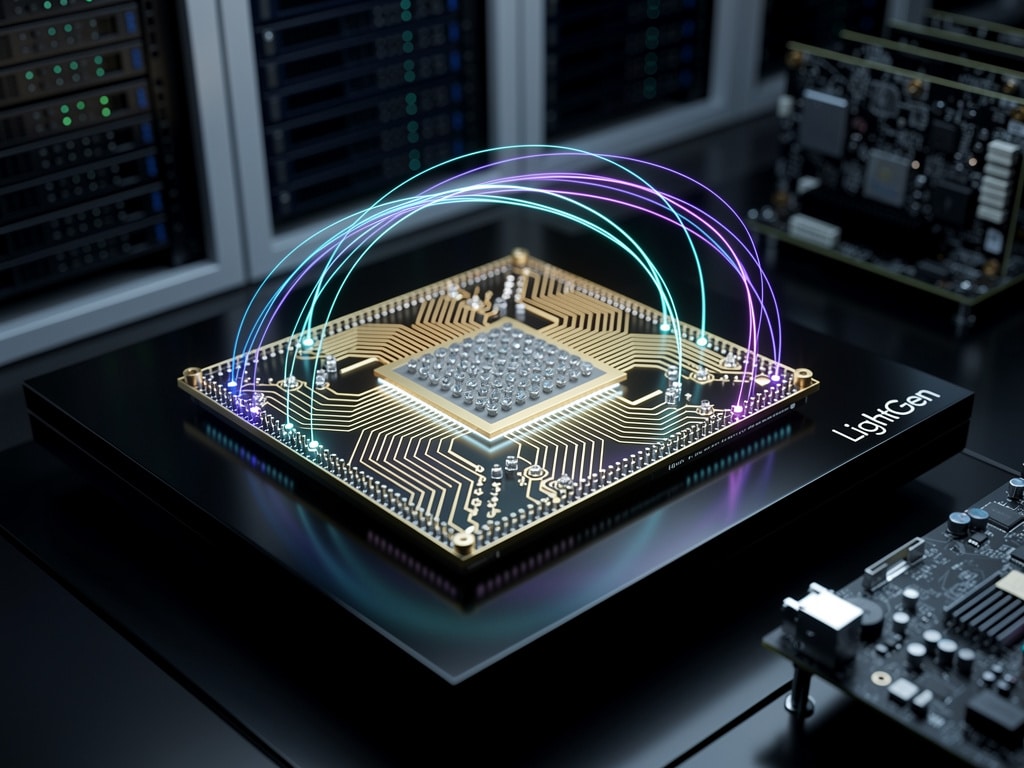
Addressing this challenge, researchers from Shanghai Jiao Tong University and Tsinghua University have developed LightGen, an all optical AI chip that performs computation using light rather than electrical signals. The chip is designed specifically for generative AI workloads and eliminates many of the efficiency losses associated with electronic data processing.
Unlike traditional processors that rely on transistors, the device uses laser light pulses and photonic components to execute AI operations directly in the optical domain. This approach avoids repeated optical to electrical signal conversions, significantly improving speed and reducing power usage. In experimental demonstrations, the chip achieved performance levels far beyond current GPU based systems.
According to the research team, the device delivers up to 35,700 trillion operations per second with an energy efficiency of 664 trillion operations per second per watt. This represents nearly a hundredfold improvement in performance and efficiency compared to Nvidia’s A100 GPU for specific generative tasks. The chip integrates over two million photonic neurons and supports end to end optical processing for image and text generation workloads.
Key features include:
- Fully optical computing architecture using laser light pulses
- Performance of up to 35,700 TOPS
- Energy efficiency reaching 664 TOPS per watt
- Optical latent space processing for generative AI
- Elimination of optical to electrical signal conversions
While the technology is still at the research stage, the device highlights the potential of photonic computing to overcome the power and scaling limits of electronic processors. If successfully commercialized, optical AI chips could play a critical role in enabling faster, greener and more sustainable AI systems in the future.


