





Astrophel Aerospace, founded in 2022 by Suyash Bafna, Immanuel Louis, and Md Taj Baba, is an Indian aerospace startup built on the belief that space should be accessible to everyone, not just governments or large corporations.
With launches expected to be fully operational in the next four to five years, Pune-based startup Astrophel Aerospace is developing reusable small satellite launch vehicles for diverse sectors.
Immanuel explains that the name ‘Astrophel,’ meaning ‘lover of stars,’ in Greek, embodies the team’s deep passion for space and their mission to make access to space more inclusive.
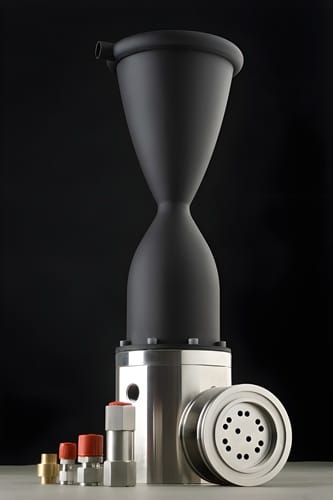
At the core of Astrophel’s offering is a reusable small satellite launch vehicle, currently under development, designed to serve clients across various sectors such as agriculture, defence, disaster management, and climate monitoring. This launch vehicle is in the research and development phase and is expected to be ready for commercial deployment within the next four to five years.
The launch vehicle is intended to enable private companies to send payloads into space at reasonable costs, which is a significant shift facilitated by National Geospatial Policy 2022, which opened the sector to private entities for the first time.
Suyash shares that Astrophel operates on a service-based model, where clients will be charged on a per-launch basis, depending on their payload size and weight. Similar to a ride-hailing system, pricing that is envisioned will range from $10,000 to $15,000 per kilogram, depending on whether the launch services are dedicated or shared.
In addition to the launch vehicle, Astrophel is also focused on developing critical subcomponents such as valves, turbo machinery, and avionics systems. These components not only support the main launch vehicle program but also represent standalone revenue opportunities by being marketed to adjacent industries, such as cryogenics, avionics, and propulsion.
Immanuel states that approximately 60% of the components are developed in-house, particularly those with cross-industry commercial potential. In comparison, the remaining 40% are sourced from reliable vendors due to limitations in capital investment and scalability.
The startup is headquartered in Pune, operating out of a 6000 square feet (approximately 557.42 square metres) facility. It has a compact team of about 18 people, including full-time staff, consultants, and interns. It is also supported by a distinguished advisory board, comprising propulsion experts with experience working at Indian Space Research Organisation (ISRO), Hindustan Aeronautics Limited (HAL), and Defence Research and Development Organisation (DRDO). Together, they bring technical oversight and strategic depth to Astrophel’s mission to democratise space access.
Though currently pre-revenue, which is typical for deep tech startups in aerospace, Astrophel is exploring early revenue through the commercialisation of its subcomponents. It is actively forming strategic partnerships, including one in the works with Meson Valves.
The startup has filed multiple provisional patents for its proprietary technology in valves, pumps, and turbo machinery, and plans to expand its intellectual property protection through international patent applications. Additionally, they are contributing to the academic and industrial landscape by publishing research under the Astrophel name.
Suyash and Immanuel emphasise the significant challenges of building a startup in the deep tech, capital-intensive aerospace sector. A major obstacle has been securing what they call ‘patience capital’ funding from investors who understand the long development timelines typical of the industry. “Attracting talent has also been tough, as many skilled engineers prefer stable government roles, such as those at ISRO, making it difficult to draw them into a startup setting. Convincing professionals to take that leap required substantial effort. Additionally, India’s vendor ecosystem is still maturing, with most suppliers focused on high-volume production, which does not align well with the low-volume, high-precision needs of R&D and prototyping”, they add.
The team is actively seeking collaborators willing to participate in research and development, which is crucial to building a more robust space technology ecosystem in India. They encourage such partnerships, recognising that mutual support and innovation are key to overcoming the infrastructural and industrial gaps currently present in the country.
Astrophel also offers paid internships, especially to long-term candidates who may later join full-time. They are in active discussions with local colleges in Pune to create hands-on opportunities for aspiring students and researchers, helping them gain practical exposure to the world of aerospace engineering and space technology.


