




A Princeton-led advancement integrates living brain cells with 3D electronics, enabling low-power pattern recognition and advancing biohybrid computing that could reshape AI efficiency and neuromorphic hardware design.
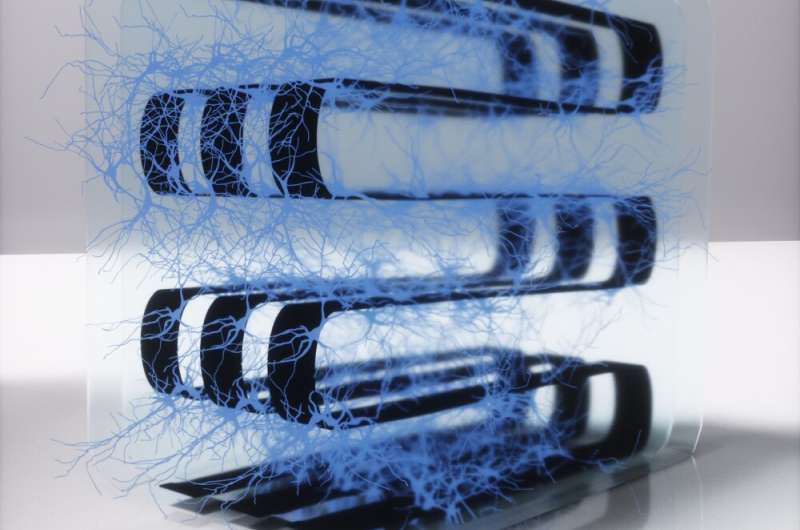
Researchers at Princeton University have developed a 3D bioelectronic device that combines living brain cells with embedded electronics, marking a significant step toward energy-efficient, brain-inspired computing systems. The system, recently reported in Nature Electronics, enables direct interaction between biological neurons and hardware in a unified architecture.
At its core is a flexible 3D mesh of microscopic wires and electrodes, coated with a thin biocompatible layer. This scaffold allows tens of thousands of neurons to grow around and through it, forming a dense, functional neural network within the device. Unlike earlier “brain-on-chip” approaches that relied on flat 2D cultures or external probing, the new design operates from within the neural network itself.
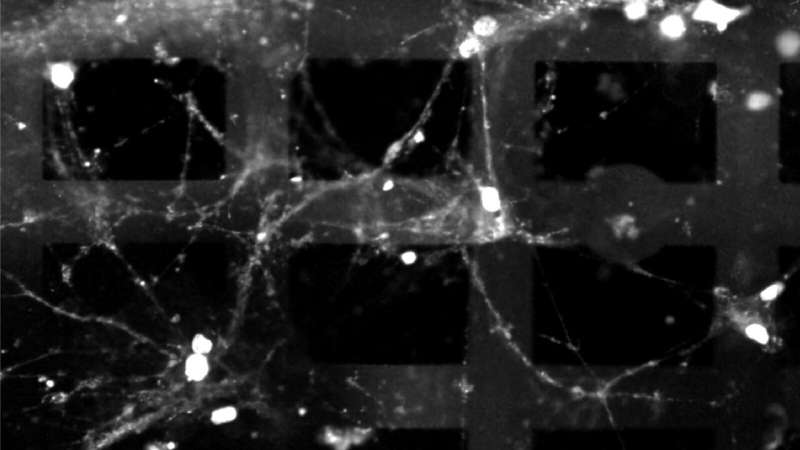
The integrated system can both stimulate and record neural activity at high resolution, enabling researchers to train the network for computational tasks. In early demonstrations, the device successfully distinguished between spatial and temporal electrical patterns—showing its potential for pattern recognition workloads typically handled by AI models.
This approach reflects a broader shift toward biohybrid electronics, in which living cells serve as computational elements. Such systems could dramatically reduce energy consumption, a growing bottleneck in modern AI. Researchers note that the human brain uses orders of magnitude less power than conventional computing systems for similar tasks, highlighting the efficiency potential of neuron-based architectures.
The work also builds on advances in neural interfaces and 3D scaffolding, where electronics are designed to match the softness and structure of biological tissue. This compatibility is key to maintaining cell viability and enabling long-term interaction between neurons and circuits.
While still experimental, the platform could evolve into scalable bio-computing systems capable of more complex tasks. Beyond AI, it may influence neuromorphic chip design, drug testing, and next-generation brain-machine interfaces. As research progresses, integrating biology directly into electronics could redefine how computing hardware is built—shifting from silicon-only systems to hybrid living architectures.


