




From hobbyist computing to industrial-grade edge AI, an Indian startup positions its hardware as a scalable alternative to Raspberry Pi’s widely used ecosystem.
Vicharak, a hardware startup building single-board computers (SBCs), is positioning itself as a performance-focused alternative to the Raspberry Pi ecosystem, arguing that modern embedded use cases increasingly require onboard AI acceleration and higher compute capability than traditional low-power boards provide.

The company’s main pitch is that workloads like edge AI inference, multi-camera processing, robotics, and industrial automation are pushing beyond what it sees as the Raspberry Pi’s design centre. While Raspberry Pi has remained widely used in education and prototyping, Vicharak says its typical configurations, including the Raspberry Pi 5, are limited by modest CPU performance and lack of native AI acceleration.
Instead of relying on external add-ons such as AI HATs, Vicharak integrates dedicated AI hardware directly into its boards, along with expanded support for video processing, storage interfaces, and multi-sensor systems. It also claims its higher-end models offer significantly more CPU cores and parallel compute capacity, targeting smoother handling of concurrent workloads and machine-learning inference.
In a conversation with Akshar Vastarpara, Founder and CEO of Vicharak, he revealed that, “We are preparing to launch a board called Axon Lite, aimed at matching Raspberry Pi-level pricing and general-purpose performance while adding built-in AI capabilities. This product is intended as a direct alternative for users who would otherwise choose a Raspberry Pi 5.”
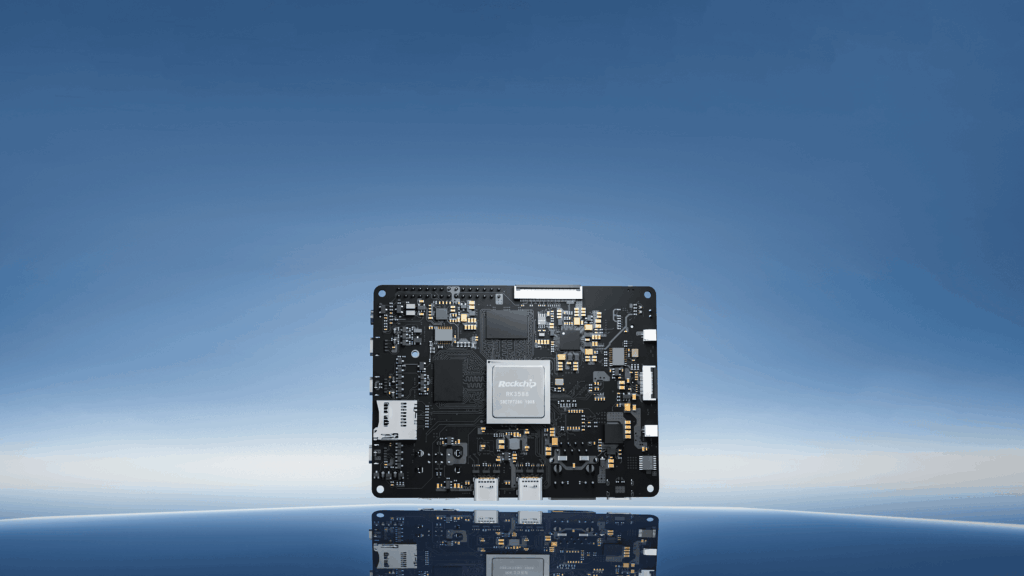
The company says its “Axon” series is built for more demanding industrial and compute-heavy workloads, and is also developing a modular SBC design that lets users physically swap hardware components and connectors based on specific deployment requirements.
Pricing across the lineup is expected to range from roughly ₹7000-₹8000 for entry-level boards to about ₹40,000 for high-performance industrial variants.
“We are not saying Raspberry Pi is obsolete,” added Akshar. “We are saying the market has evolved. Different applications now need different levels of compute, and a single low-power approach no longer fits all use cases.”
Vicharak frames its strategy around a broader shift in the SBC market, where it believes a single low-power platform is no longer sufficient. Instead, it sees demand splitting between education-focused devices and more capable systems designed for AI-native and edge-deployed workloads.
The company acknowledges Raspberry Pi’s strong ecosystem advantage but argues that hardware requirements are evolving faster than software loyalty. Its bet is that performance and integrated AI capability will become more important than compatibility alone in future embedded deployments.

