


Gallium nitride-based power converter technology that could reduce size, cost and energy losses, while supporting rapidly expanding computing infrastructure and AI-driven data centres.
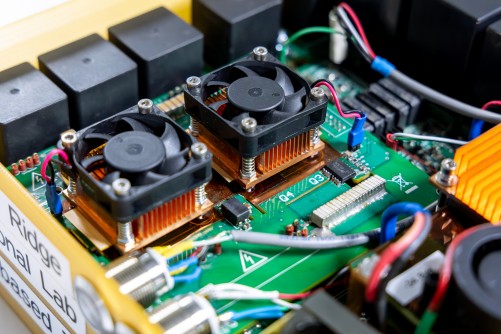
Researchers at Oak Ridge National Laboratory have developed a new semiconductor-based power converter design that could significantly reduce the size and cost of power systems while improving efficiency, a development that may support future AI infrastructure and high-density computing environments.

The work replaces conventional silicon-based semiconductor components with gallium nitride (GaN) devices. The approach aims to address increasing demands for compact and efficient power management systems as data centre capacity expands.
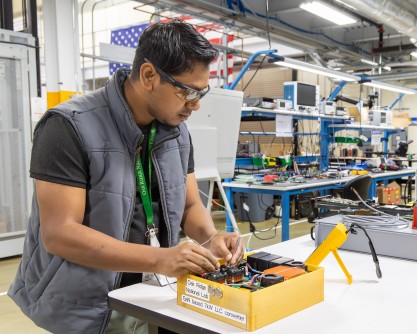
Power converters are critical electronic systems that regulate voltage and current flow between power sources and equipment. They are widely used in servers, industrial systems and energy applications. Traditional converters largely rely on silicon semiconductors, but researchers say GaN components can switch much faster while reducing energy losses.
According to the research team, GaN devices can operate at switching speeds roughly 10 to 20 times higher than conventional silicon technologies. Faster switching enables designers to reduce the size of magnetic components and other supporting hardware, helping create smaller and lighter converter systems.
The prototype converters were developed and validated at ORNL’s Grid Research Innovation and Development Centre (GRID-C), where researchers tested the technology to evaluate efficiency and system performance. The findings suggest that smaller converter architectures could also lower installation and maintenance costs while improving deployment flexibility for larger systems.
The development may be particularly relevant for AI-focused computing facilities, where power delivery requirements continue to rise. Large-scale data centres can require multiple converters per server, with facilities often containing hundreds or thousands of servers. As processing demands increase, the cumulative impact of converter size, weight and efficiency becomes increasingly significant.
The work reflects a broader industry shift toward wide-bandgap semiconductor materials, such as gallium nitride, as manufacturers seek higher-performance alternatives to traditional silicon technologies.