


A fast-charging battery approach capable of reaching high charge levels in six minutes, potentially reducing charging times while preserving energy density and long-term battery performance.
Researchers have developed a battery technology that could push electric vehicle charging times closer to conventional refuelling speeds, achieving more than 85% charging in under six minutes without significantly compromising battery lifespan or energy density.

The advance, led by researchers at the University of Adelaide, focuses on overcoming a major challenge in high-capacity battery systems: rapid degradation during ultra-fast charging. While existing high-energy batteries can deliver strong performance, aggressive charging often generates excess heat and accelerates material wear, reducing usable life and raising safety concerns.
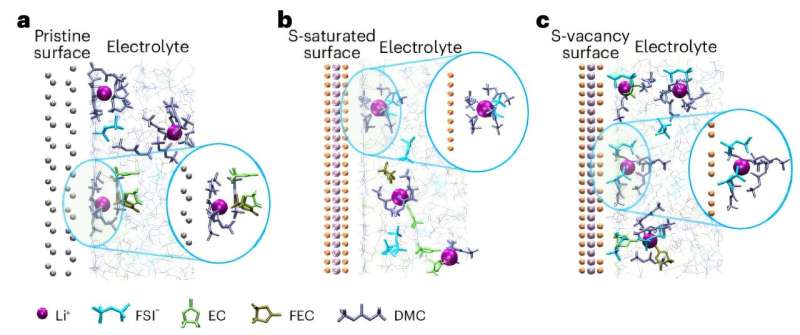
The team addressed the issue through a technique called interfacial anion-reduction catalysis. Instead of redesigning the entire electrolyte system, the method modifies electrochemical reactions only at the battery interface. Researchers said catalytic sites attract anions to form a stable inorganic protective layer around the electrode, helping maintain fast ion movement while improving long-term stability.
Using pouch-cell prototypes, the researchers recorded energy densities of around 240.4Wh/kg while achieving charging performance above 85% within six minutes. The cells also retained approximately 76% of their capacity after 500 high-speed charging cycles, indicating that charging speed improvements may not necessarily come at the expense of battery longevity.

The development comes as automakers and battery manufacturers race to shorten EV charging times, a factor frequently cited as a barrier to wider adoption of electric vehicles. Recent industry efforts have focused on faster charging systems and advanced battery chemistries, but balancing speed, safety and lifecycle performance has remained difficult.
Although the technology remains at the research stage, the findings suggest a possible route towards batteries capable of delivering near-refuelling convenience while maintaining practical energy density for future electric mobility and energy storage applications.