




What happens when AI begins helping design quantum hardware? A processor now suggests the answer could arrive sooner than expected.
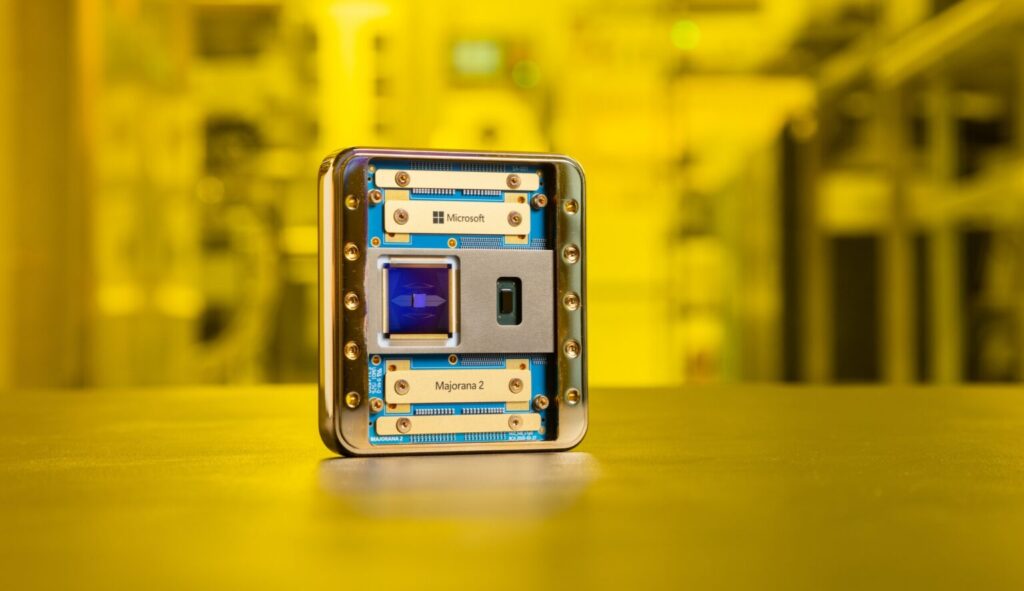
Microsoft has unveiled Majorana 2, its latest topological quantum processor, developed with assistance from Microsoft Discovery, the company’s AI driven research platform. The new chip introduces a redesigned materials stack and qubits that are reportedly 1000 times more reliable than those in the previous generation, prompting Microsoft to move its target for a scalable quantum computer forward to 2029.
One of the biggest challenges in quantum computing is maintaining stable qubits long enough to perform useful computations. The new processor addresses this limitation by significantly extending qubit lifetime and improving measurement reliability. The chip advantages include a mean qubit lifetime of 20 seconds, with some qubits remaining stable for up to one minute, compared to the microsecond scale typically associated with many quantum computing approaches. Key features include a new topological qubit architecture, a revised superconducting materials stack, one microsecond operation speeds, and qubit dimensions measuring roughly one hundredth of a millimetre.
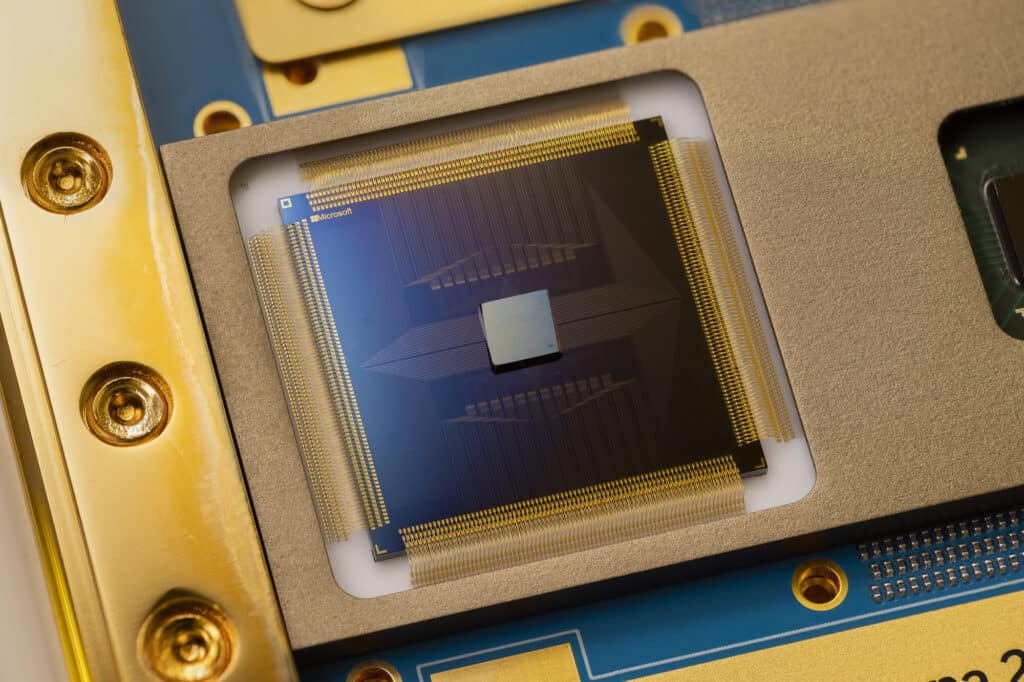
A major change in the processor is the adoption of lead based superconducting structures in place of aluminium used in earlier devices. In topological quantum systems, superconducting materials help protect fragile quantum states from environmental disturbances that can introduce errors. Microsoft reports that the new materials approach contributed significantly to the observed reliability improvements.
Beyond quantum computing, the same AI driven research framework is being positioned for applications in materials science, energy, manufacturing, and life sciences. The work demonstrates how AI is increasingly becoming part of the engineering process itself, assisting researchers in discovering, validating, and refining technologies that would otherwise require years of experimentation.
“In the year since we launched, we’ve seen customers light up use cases across critical industries like life sciences, chemicals and materials, energy, manufacturing and consumer goods,” says Aseem Datar, corporate vice president, product innovation for Microsoft Discovery. “With companies like Syensqo developing next-generation fluids for semiconductor manufacturing, the opportunities for impact are vast.”
Click here for the official announcement.

