A sodium based battery system has now completed real world validation, bringing an abundant alternative to lithium closer to large scale deployment.
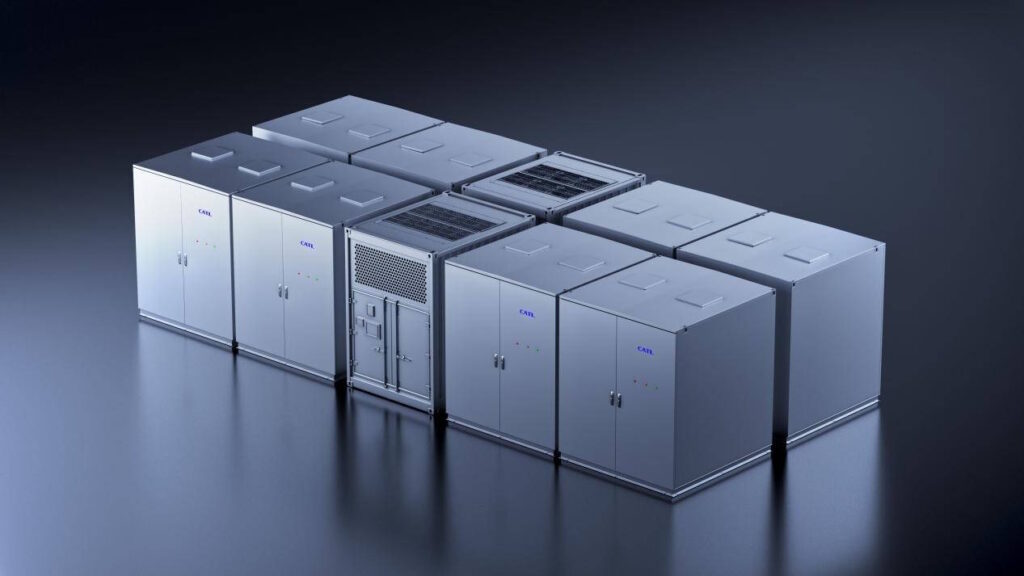
CATL has unveiled what it describes as the world’s first field validated sodium ion battery energy storage system, marking a significant step toward commercial adoption of an alternative to lithium based batteries.
As demand for large scale energy storage grows, concerns around lithium supply, cost, and geographic concentration have intensified. Sodium offers an attractive alternative because it is far more abundant and widely distributed. However, sodium ion technologies have struggled to achieve commercial maturity despite years of research.
The system aims to address that challenge. Each Tener Sodium unit delivers more than 30MWh of storage capacity through a modular architecture, allowing multiple units to be combined into gigawatt scale projects. According to the company, 34 units can support a 1GWh installation.
Beyond resource availability, the technology is designed to improve durability and safety. The system is rated for 15,000 charge cycles at 25°C and is expected to achieve an operational life of 25 to 30 years while maintaining a 70 per cent state of health. It also supports storage durations ranging from one to eight hours.
The company reports that the battery design reduces cell expansion force by 40 per cent and gas generation by 35 per cent compared with conventional approaches. During thermal runaway events, the system maintains a surface temperature of around 200°C, which the company says is approximately 60 per cent lower than typical lithium ion systems. Additional design measures are intended to improve fire and explosion resistance.
The modular design allows individual faulty modules to be isolated and replaced without affecting the entire installation, potentially lowering maintenance costs for utility operators.
“We believe that sodium and lithium together will form the twin foundations of the future energy storage system,” says William Wu, Director of CATL’s Energy Storage Technology Centre.
If the technology performs as expected in large deployments, sodium ion batteries could become an important complement to lithium based storage systems in the global energy transition.
Click here for the official announcement.