Can one material deliver both tunability and low energy loss? Researchers have demonstrated a solution once considered impossible for microwave electronics.
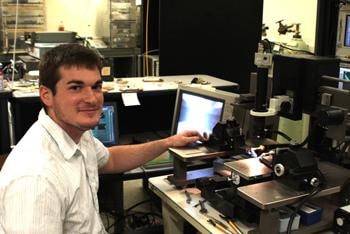
Researchers from Cornell University, the National Institute of Standards and Technology (NIST), Rice University, the University of Connecticut, the University of Maryland, Boise State University, and other collaborators have demonstrated a dielectric material that combines electrical tunability with exceptionally low microwave energy loss, overcoming a challenge that has limited microwave electronics for more than two decades.
Designers of wireless communication, radar and satellite systems have long faced a trade off. Materials that can change their electrical properties under an applied voltage typically suffer from higher energy losses, while low loss materials generally cannot be tuned. This limitation has restricted the performance and miniaturization of high frequency electronic components.
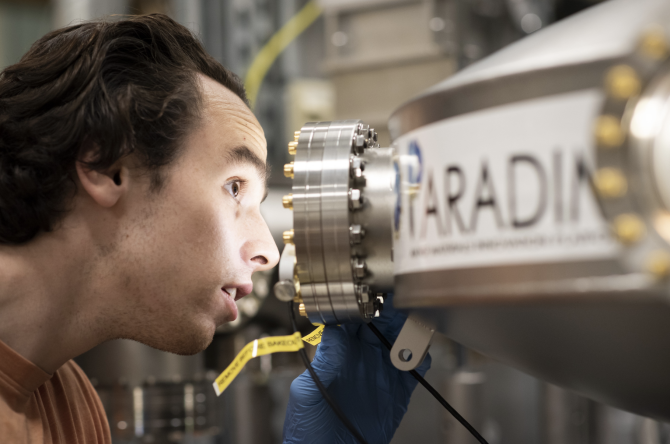
The research team addressed this by engineering a layered crystalline material known as a Ruddlesden Popper thin film. By modifying its atomic structure with carefully positioned rock salt layers, the researchers altered the material’s internal symmetry, allowing it to achieve out of plane electrical tunability while preserving its low loss characteristics. The work was further supported by a newly developed microwave measurement technique that isolated the material’s true electrical response at high frequencies.
The combination of these advances enabled the researchers to verify a property that had remained out of reach despite years of investigation. The material also exhibited highly uniform behaviour, an important requirement for reliable large scale manufacturing.
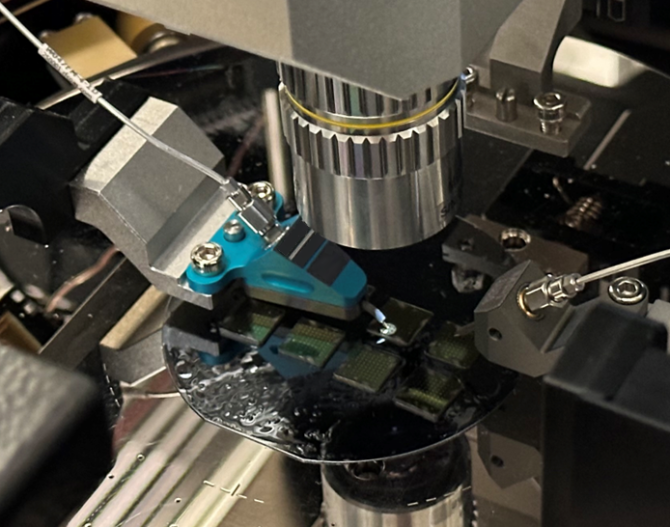
The breakthrough could lead to more efficient voltage tunable filters, microwave resonators, electro optic modulators and quantum information systems, while providing a new design pathway for future microwave materials and devices.
“My group and I engineer the structure of materials at literally the atomic layer level, but our skill in isolation is little more than a curiosity. The magic of teaming is that it can compound capabilities to achieve the unthinkable,” says Professor Darrell Schlom, Tisch University Professor in the Department of Materials Science and Engineering at Cornell University.