


Researchers created compostable circuit boards from fungal biomass waste, reducing carbon emissions while enabling biodegradable electronics that support a more circular manufacturing economy worldwide.
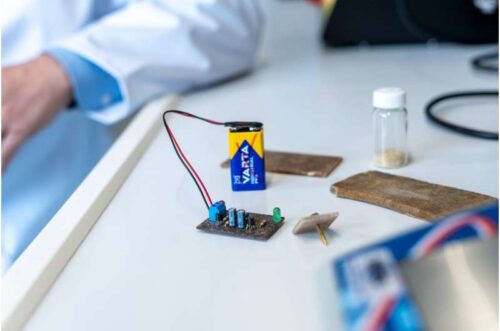
TU Bergakademie Freiberg researchers have developed AnimatPCB, a fully compostable printed circuit board made from fungal mycelium generated as a by-product of industrial citric acid production. The biodegradable board, detailed in the journal Cleaner Materials, offers a sustainable alternative to conventional glass fibre-reinforced epoxy circuit boards and could reduce the carbon footprint of electronics manufacturing by up to 56 per cent.

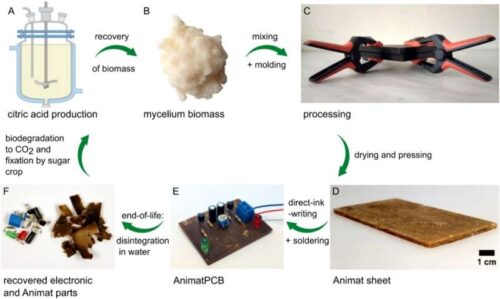
Electronic waste continues to grow worldwide, while traditional printed circuit boards remain difficult to recycle because they rely on fossil-based materials. To address this challenge, the research team converted mycelium from Aspergillus niger into a plastic-like sheet through moulding and air-drying before depositing electronic components using standard manufacturing techniques, including direct ink writing, etching and manual soldering.
Laboratory testing showed the fungal material provides good mechanical strength and thermal stability. Although its electrical performance remains below that of conventional printed circuit boards, the researchers said it is already suitable for prototype and low-frequency applications, including environmental sensors, consumer products and electronic toys.
The team noted that further optimisation is required before the material can meet recognised industry standards, particularly by improving resistance to water absorption and completing additional certification testing.

The biodegradable substrate is designed to dissolve safely in water at the end of its service life, allowing electronic components such as transistors to be recovered and reused. This approach reduces reliance on non-renewable raw materials while simplifying end-of-life recycling.
With global electronic waste expected to reach around 82 million metric tonnes annually by 2030, the researchers believe compostable circuit boards could support a more circular electronics industry. By transforming an industrial waste product into a functional electronic material, the technology demonstrates how sustainable design can lower emissions while reducing the environmental burden associated with discarded electronic devices.