A gate driver helps electric vehicles use power better, reduces power loss, supports software settings, and works with different power devices and systems.
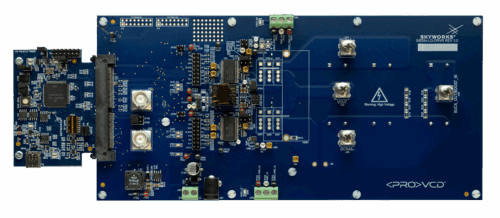
Skyworks Solutions has introduced the Si829x, a new isolated safety gate driver designed for electric vehicle (EV) traction inverters and other electrified systems. The device can also be used in electric trucks, industrial motor drives, agricultural vehicles, robotaxis, and electric vertical take-off and landing (eVTOL) aircraft.
The Si829x has been developed to meet ISO 26262 functional safety standards and supports systems up to ASIL D. It includes built-in safety features such as diagnostic fault detection, fault reporting, power-up self-checks, safe-state operation, and certified isolation technology to improve system safety and reliability.
Unlike conventional voltage-mode gate drivers, the Si829x uses the company’s second-generation ProVCD variable current drive technology. It allows gate drive waveforms and switching current to be controlled through a digital interface on every switching cycle. According to the company, this can reduce switching losses by up to 44% compared to voltage-mode gate drivers while improving thermal performance, reducing electromagnetic interference (EMI), lowering filtering requirements, and helping reduce PCB size and overall system cost.
The gate driver provides up to 15A three-phase turn-on and turn-off current control and is available in multiple package options to support different thermal and design requirements.

The Si829x is designed as a software-configurable platform, allowing engineers to adjust gate drive parameters without changing hardware components. This enables reuse of the same inverter design across different vehicle platforms, shortens development and validation time, and allows designers to optimize performance, efficiency, or cost through software.
The device is compatible with both silicon carbide (SiC) FETs and IGBTs. It also integrates a VPOS regulator to generate bipolar gate drive voltages, eliminating the need for an external negative gate bias supply and simplifying inverter design. According to the company, this helps reduce development effort and speed up product design.
Click here for the original announcement.