


Can freshwater and seawater generate electricity? Japan’s osmotic power plant uses membranes and pressure differentials to deliver continuous renewable energy.
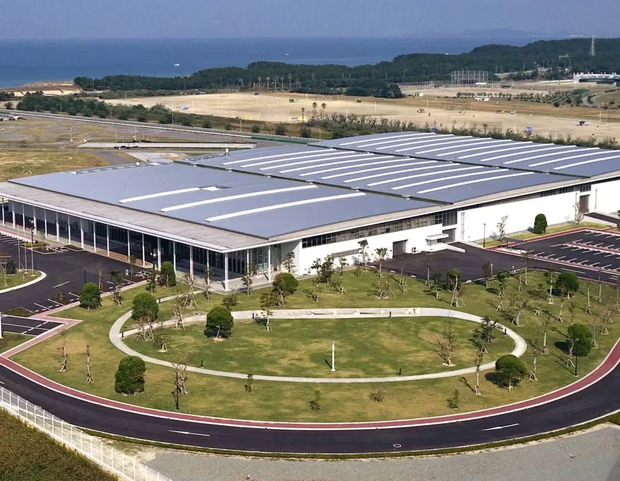
Japan has commissioned an osmotic power plant in Fukuoka that harnesses the pressure created when freshwater and seawater pass through a semipermeable membrane. The facility, among only a handful of such installations globally, generates approximately 880,000kWh of electricity annually to help operate a nearby desalination plant while showcasing an alternative source of round-the-clock renewable energy.

Unlike solar and wind systems that depend on weather conditions, osmotic power produces electricity continuously wherever freshwater and seawater meet. The system uses specially engineered membranes to separate the two water streams. As freshwater naturally moves through the membrane into the saltwater side by osmosis, pressure builds up. This pressurised flow is then directed through a turbine connected to a generator, converting hydraulic pressure into electrical energy.
The plant uses concentrated brine from the desalination process instead of ordinary seawater, increasing the salinity difference across the membrane and improving energy recovery. Advanced membrane materials, high-efficiency pumps and pressure-recovery systems further enhance the overall system performance.
Researchers believe osmotic power could complement other renewable sources in coastal regions, particularly where desalination plants already produce concentrated brine. Pilot projects have also been demonstrated in Denmark, Norway, South Korea, Spain, Qatar and Australia, highlighting growing interest in the technology.

Although membrane efficiency, pumping losses and infrastructure costs remain challenges for large-scale deployment, continued advances in membrane engineering and fluid handling technologies are expected to improve commercial viability. As desalination capacity expands worldwide, osmotic power could offer a means of recovering energy from saline water streams while providing a stable, weather-independent source of renewable electricity.