What if solar panels could tell you exactly when they need cleaning? A new AI system aims to make that possible.
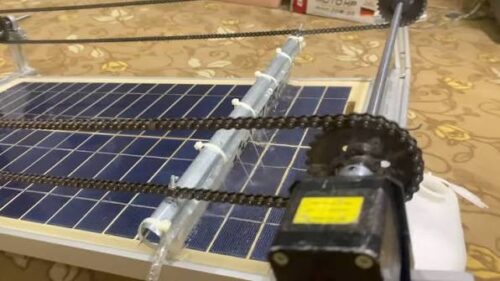
As India’s solar capacity grows, keeping solar panels clean has become a major challenge. Dust, bird droppings, industrial pollutants, and other debris can reduce power generation by up to 40%, while conventional cleaning methods require significant water, labor, and scheduled maintenance regardless of the panels’ actual condition.
To address this, researchers at the National Institute of Technology (NIT) Rourkela have developed an AI-powered autonomous system that monitors solar panels and recommends cleaning only when needed. The system uses federated learning to detect faults, assess panel conditions, and optimise maintenance without sharing raw operational data.
Unlike conventional AI systems that send raw data to a central server, the new platform shares only encrypted model updates. This federated learning approach improves data privacy while reducing bandwidth requirements and enhancing cybersecurity and scalability. The technology has been validated through simulations and is currently at Technology Readiness Level (TRL)-3, demonstrating proof of concept under controlled conditions.
The patented system combines federated learning, edge computing, artificial intelligence, autonomous cleaning, and predictive maintenance into a single platform. It provides real-time edge intelligence, autonomous fault detection, selective cleaning, reduced water consumption, and lower maintenance costs.

The researchers say the system can be deployed in utility-scale solar power plants, floating solar farms, rooftop photovoltaic installations, industrial solar parks, smart city energy infrastructure, defence installations, and remote off-grid renewable energy systems.
The next phase of the project will focus on building a hardware prototype integrated with IoT sensors and validating the technology through pilot deployments. The team also plans to work with government agencies and industry partners for field trials and technology transfer.
Future versions of the platform are expected to include drone-assisted inspection, multi-agent collaborative cleaning, and predictive energy yield forecasting.
The researchers say the innovation supports India’s National Solar Mission and net-zero goals by enabling autonomous, privacy-preserving maintenance of solar energy infrastructure while reducing operational costs and water consumption.