Could one electron replace thousands in memory storage? Researchers have demonstrated a flash memory design that could reduce AI power consumption.
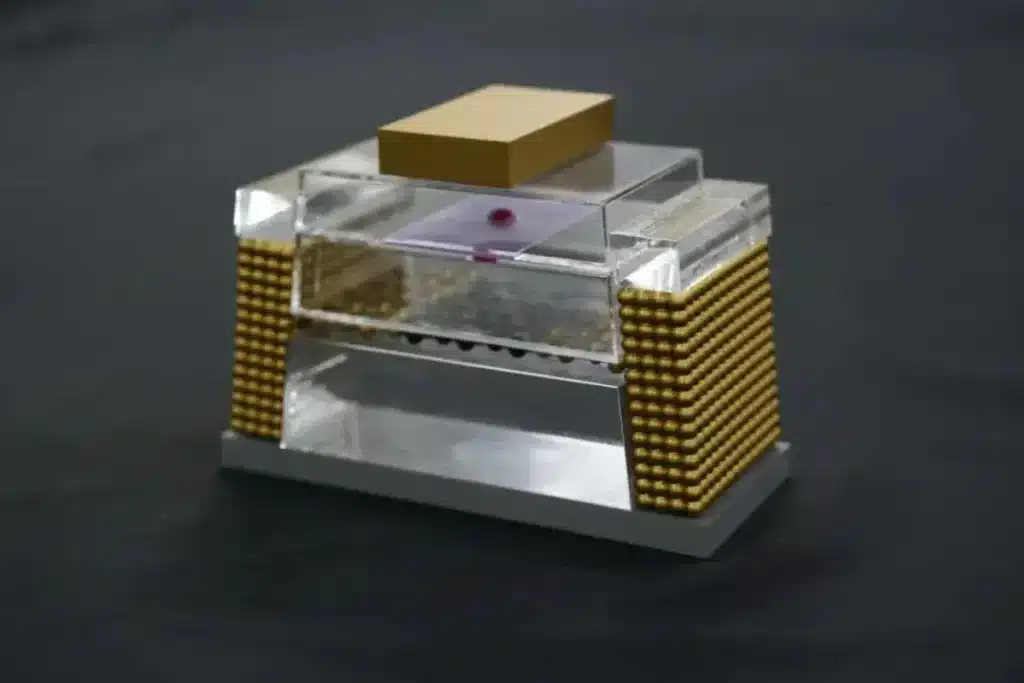
Scientists at Fudan University have developed a two-dimensional flash memory that stores a single bit of information using just one electron, a milestone that could improve the energy efficiency of AI hardware and future memory chips. Detailed in the journal Science, the device operates at room temperature and addresses a long-standing challenge in semiconductor memory by reliably detecting and retaining the charge of a solitary electron.
Conventional DRAM devices typically require large numbers of electrons to represent a binary state, ensuring stored data remains stable. The researchers say reducing that requirement to a single electron could significantly lower power consumption while maintaining data integrity. Such capability may enable large language models to run on mobile devices with lower energy requirements, while retaining conversational context more effectively.
Named Guiyi, the memory architecture uses a graphene layer to prevent electrons from escaping while amplifying the electrical signal generated by a single stored charge. According to the research team, the design increases the detectable signal from tens of millivolts to around 0.5V, representing a tenfold improvement over previous single-electron memory demonstrations. The chip also revealed two quantum effects—programming voltage quantisation and self-limiting programming—which could eventually enable storage across multiple quantum states, increasing memory density beyond conventional binary architectures.
The development builds on the university’s earlier work on non-volatile memory technologies, including the PoX storage device and the Changying hybrid flash memory platform. According to the researchers, the technology is moving towards commercialisation, with plans to establish a company later this year and begin bringing the architecture to market within three to five years.

“The ability to store data with a single electron while combining speed, stability and energy efficiency in one design is what inspired the name Guiyi, meaning ‘return to one’,” says Zhou Peng, Professor of Microelectronics at Fudan University.