

A newly launched coffee-infused printing filament combines recycled coffee grounds with biodegradable plastic, improving sustainability while delivering reliable performance and a distinctive aroma.
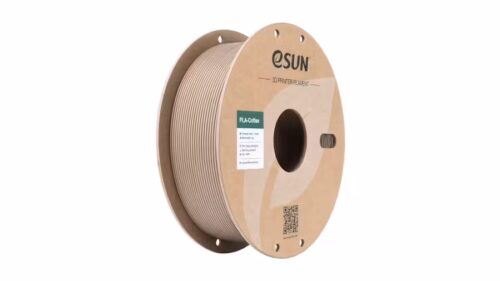
eSun has introduced PLA-Coffee, a new fused filament fabrication (FFF) material that combines conventional polylactic acid (PLA) with recycled coffee grounds to improve sustainability while maintaining dependable printing performance. The filament is designed for eco-conscious makers, offering a biodegradable material that also releases a coffee aroma during printing.
The new material incorporates upcycled coffee grounds into a standard PLA formulation, increasing its environmental credentials without significantly altering the printing process. According to the manufacturer, the filament produces a smooth surface finish, well-defined layer lines and a balanced combination of strength, stiffness and toughness, making it suitable for concept models, prototypes and general-purpose prints.
PLA is one of the most widely used materials in FFF three-dimensional printing because of its relatively low melting temperature, ease of use and production from renewable resources such as corn or sugarcane. By blending used coffee grounds into the material, the new filament enhances biodegradability while retaining compatibility with most FDM printers. The company also claims the material delivers an immersive coffee aroma throughout the printing process and produces prints with a matte finish and good layer adhesion.
The filament is supplied in 1.75mm diameter spools weighing one kilogram and is available in a range of muted colours. Recommended printing settings include an extruder temperature of 210–230°C, a heated bed temperature of 55–65°C, full cooling fan speed and print speeds below 250 mm/s for optimal results. The manufacturer notes that slight batch-to-batch colour variation may occur because of the natural coffee additive.
The launch reflects growing interest in sustainable manufacturing materials that repurpose waste streams while reducing reliance on virgin resources. By transforming discarded coffee grounds into a functional additive for additive manufacturing, the material offers makers an environmentally conscious alternative without compromising ease of printing or print quality.