

MIT researchers have engineered bacterial cells into programmable transistor-like elements, creating living circuits that can process signals and potentially control biological responses in future.
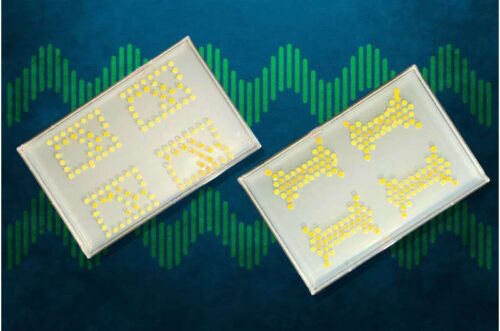
Massachusetts Institute of Technology (MIT) researchers have engineered bacteria to function as transistors, creating what the study describes as living ‘circuit boards’ that can be printed onto a growth medium. The source does not identify a commercial company or product; instead, it presents the work as biological research published in Nature Chemical Biology.
The approach uses bacterial cells as individual circuit elements rather than building an entire circuit inside one cell. Researchers engineered Pantoea agglomerans bacteria to act as two types of transistors. These can switch on or off in response to specific molecular signals, allowing the cells to detect target molecules and produce an output molecule.
The researchers also used three strains of the bacteria as relays. These relays transfer signals from one transistor to another, allowing the biological components to be connected in ways resembling an electronic circuit board. Colonies were printed onto plates containing a growth medium, with each colony positioned close enough to pass signals to the next one.
The resulting circuits can perform several logic operations depending on how the bacterial colonies are arranged. The researchers demonstrated functions including ‘multi-input’, ‘or’ and ‘imply’ gates, as well as circuits capable of adding two signals, processing multiple signals simultaneously and performing a demultiplexer function.
The largest demonstrated circuit contained 24 bacterial colonies and could add two inputs. However, these biological circuits are considerably slower than conventional computers, taking about eight hours for a calculation.
Rather than replacing conventional computers, the researchers see potential in biological applications. Future systems could potentially be placed on plants to detect different types of stress and trigger responses, such as producing a fungicide.