

A British engineering programme is developing rare-earth-free axial flux motors designed to maintain high power density while reducing dependence on important materials and supply risks.
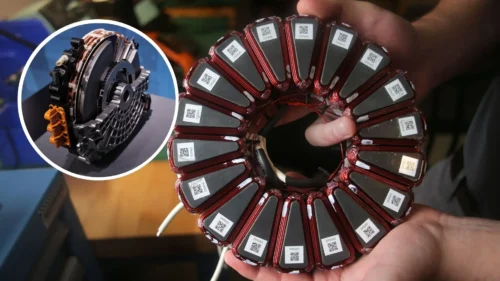
YASA is set to develop a new generation of rare-earth-free axial flux electric motors after securing UK government funding through Project Resilience. The technology is intended for future electric and hybrid vehicles, with the programme focused on reducing dependence on rare-earth materials while maintaining power density, efficiency and compact packaging.
Rare-earth permanent magnets have played an important role in producing powerful and compact electric motors, but their geographically concentrated supply chains create potential challenges for vehicle manufacturers. Growing concerns over availability, environmental impact, security of supply, export restrictions and price volatility are increasing the pressure to develop alternatives.
The programme will investigate heavy-rare-earth-free permanent-magnet motor designs for high-performance battery-electric and hybrid vehicles. According to the company, the designs aim to maintain high levels of power density without increasing motor mass or package size.
Project Resilience will develop two complementary technology pathways, giving vehicle manufacturers greater flexibility when selecting motor architectures for different applications. The approach recognises that electric vehicles can require different balances of performance, efficiency, packaging, cost and production volume.
The work is centred on an axial flux architecture, which the company describes as a platform for exploring next-generation electric motor technology. The stated objective is to support a more sustainable and secure future for electric propulsion while retaining the high power density associated with the technology.
The project also addresses the challenges associated with heavy rare-earth materials. These materials are commonly used to help permanent magnets withstand high temperatures and demanding operating conditions, but extracting and processing them can be difficult and carbon-intensive.
The new motor designs could therefore provide vehicle manufacturers with alternatives that reduce exposure to constrained material supply chains. By developing complementary technologies rather than pursuing one universal solution, the programme aims to offer greater flexibility across future electric and hybrid vehicle applications.