





A sheet uses optical fibres to track bending and twisting, creating a digital model for movement tracking and physical therapy.
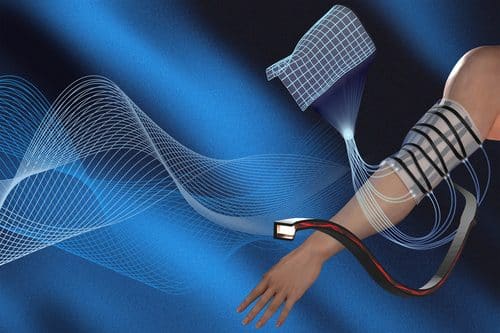
MIT engineers have developed a sheet that tracks its shape as it bends and twists, then recreates its movements in a digital model. The technology uses optical fibres embedded in silicone and could help physical therapists measure patients’ movements or allow users to control robots and video game characters through gestures.
The sheet uses optical fibres arranged in a zig-zag pattern. As it bends, the fibres change the amount of light reaching sensors at their ends. An algorithm processes these changes to reconstruct the sheet’s three-dimensional shape in near real time. In tests, the difference between the physical and reconstructed shapes was less than 4 millimetres. The system could also estimate the shape when some fibres were cut or disconnected.
The MIT team made fibres with a rubber core and a black rubber outer layer. They roughened one side of each core while leaving the other side smooth. When a fibre bends towards its rough side, more light scatters than when it bends towards its smooth side. This difference helps the system determine the direction and extent of bending.
The researchers used computer simulations to compare fibre arrangements, including checkerboards and intersecting zig-zags. They simulated how each design responded to bending and twisting. The zig-zag arrangement produced the closest match between the original and reconstructed shapes.

They built a sheet using this arrangement, placing an LED at one end of each fibre and a light sensor at the other. A circuit board collected and amplified the readings, which an algorithm converted into a digital model. Tests using 3D-printed moulds allowed the team to compare the reconstructed surface with the actual shape.
The researchers reported an error of less than 0.4 centimetres. Yu noted that designs based on rigid sensors have reported errors of around 1–2 centimetres.
The current fibres are 1 millimetre thick. The team plans to explore manufacturing methods to reduce their thickness to tens of micrometres, allowing more fibres to fit into a sheet and capture changes in shape.
The researchers aim to use the technology to help physical therapists record and compare patients’ progress across rehabilitation sessions. The sheet could also be developed into a garment that tracks body movements to control robots or video game characters.

