




A thorium-229 nuclear clock uses feedback from atomic nuclei to correct laser-frequency drift, operating for more than 24 hours with frequency instability approaching one part in a quadrillion.
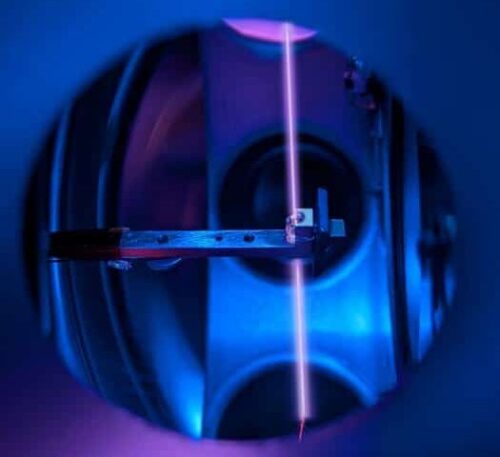
Physicists at TU Wien in Austria, working with Germany’s national metrology institute Physikalisch-Technische Bundesanstalt (PTB) and other research partners, have demonstrated a nuclear clock that uses thorium-229 nuclei to stabilise the laser that drives it. Published in Nature on 7 October 2026, the system remained operational for more than 24 hours without manual intervention, marking a significant step towards a self-stabilising nuclear clock.
Unlike conventional atomic clocks, which use transitions between electronic energy levels, this clock relies on an energy transition within an atomic nucleus. The researchers reported fractional frequency instability approaching 10⁻¹⁵ over one day, equivalent to a timing deviation of roughly one second over 30 million years when expressed as a simple long-term comparison. However, this is a measure of frequency stability, not a demonstration that the prototype has maintained absolute time to that accuracy over 30 million years.
The key material is thorium-229, a radioactive isotope with an unusually low-energy nuclear transition. Most nuclear transitions require energies that conventional lasers cannot readily supply. Thorium-229 is an exception: its nuclear transition can be excited using vacuum-ultraviolet light at a wavelength of approximately 148nm. This makes it possible to probe the nucleus directly using laser spectroscopy.
The researchers embedded thorium-229 nuclei in a millimetre-sized calcium fluoride crystal maintained at room temperature. A laser excites the nuclei, while the system measures how much light the crystal absorbs at different frequencies. When the laser frequency moves away from the nuclear resonance, absorption changes. The resulting error signal tells the control system which way to adjust the laser frequency, allowing it to correct long-term drift automatically.
This feedback loop is the central advance. Earlier experiments had demonstrated the thorium nuclear transition and used it for precision measurements, but the nuclear reference had not yet been used in the same way to steer the laser that interrogates it. The new arrangement allows the nuclear transition to provide long-term frequency feedback rather than relying entirely on a conventional atomic reference for that purpose.
The system nevertheless uses additional stabilisation. A high-finesse optical cavity provides short-term laser stability, while feedback from the thorium nuclei compensates for slower drift. The researchers also compared the nuclear clock’s frequency against a conventional ytterbium-ion optical clock to evaluate its performance. Therefore, the device is self-stabilising in its operation, but it is not an entirely independent system without external reference equipment or supporting hardware.
The distinction between frequency stability and accuracy is important when comparing the prototype with existing clocks. The researchers reported a fractional frequency instability of approximately 3 × 10⁻¹²/√τ, where τ is the averaging time in seconds, approaching 10⁻¹⁵ over a day. These results demonstrate stable operation, but the prototype has not surpassed the best optical atomic clocks in overall performance. The team expects improvements from stronger ultraviolet lasers and better thorium-doped crystals.
Nuclear clocks are attractive because nuclei are much less sensitive than electron shells to many external electromagnetic disturbances. This could eventually support more robust precision measurements and enable new tests of fundamental physics. The thorium-229 transition is particularly interesting because its frequency is sensitive to changes in fundamental constants, making it useful for experiments investigating possible interactions involving dark matter. The Vienna team has already used its measurements to place constraints on models of ultralight dark matter.
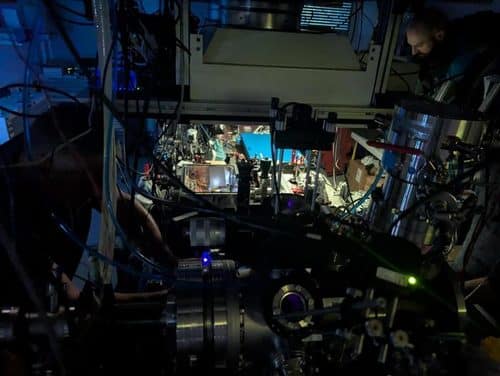
For India, the development is relevant to the broader field of precision timekeeping. CSIR-National Physical Laboratory (CSIR-NPL) in New Delhi maintains Indian Standard Time using an ensemble of caesium atomic clocks and hydrogen masers, with traceability to Coordinated Universal Time. The laboratory is also developing an optical clock based on a trapped ytterbium ion. These efforts illustrate how advanced timekeeping research can support national measurement standards and precision applications.
However, the Vienna prototype is still a laboratory system, and practical nuclear clocks remain a future prospect. Its significance lies in demonstrating that a nuclear transition can provide feedback to stabilise its own interrogation laser over extended operation. With further improvements in laser technology, crystal quality and system stability, nuclear clocks could become a valuable addition to precision measurement, fundamental physics and, eventually, selected timekeeping applications.
For more information, click here.
