

NASA’s solid-state battery cells withstand −170°C exposure and operate at −80°C, potentially reducing heating requirements for future lunar missions.
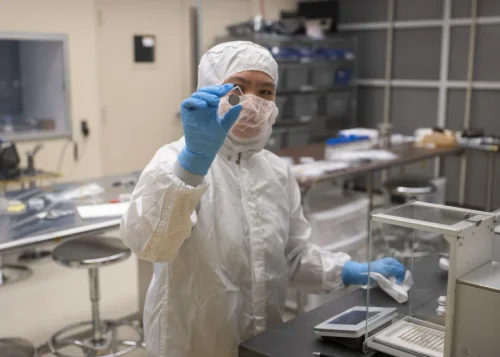
NASA has developed solid-state battery cells that continue operating at temperatures as low as −80°C and survive exposure to −170°C without damage. The technology could help power lunar rovers, scientific instruments and other equipment operating in extreme environments, where conventional batteries require thermal management to prevent performance loss.
The development is part of the Solid Power for Extreme Environment Adaptability and Resilience in Space (SPEARS) project, led by NASA’s Glenn Research Center. NASA’s Langley Research Center conducts thermal-vacuum testing, while Ames Research Center is developing the electronics and test boards needed for potential flight applications. NASA announced the development on 14 October 2026.
The battery technology replaces the liquid electrolyte found in conventional lithium-ion cells with a solid electrolyte. This approach could improve safety and enable operation across a wider temperature range, although the prototypes remain at the laboratory testing stage.
Conventional lithium-ion batteries rely on lithium ions moving between electrodes through a liquid electrolyte. At low temperatures, ion movement slows and internal resistance increases, reducing the battery’s ability to deliver power. Extreme cold can also affect charging performance and damage cells under unsuitable operating conditions.

SPEARS uses a solid ceramic- or polymer-based electrolyte instead. Solid electrolytes can reduce risks associated with liquid leakage and flammable electrolyte materials, depending on the chemistry used. However, solid-state batteries still face challenges involving ion transport, electrode interfaces and performance at extreme temperatures. NASA has not disclosed the precise electrolyte formulation or electrode chemistry used in the SPEARS prototypes.
According to NASA, the cells performed across temperatures ranging from −60°C to 80°C, with operation continuing at −80°C at reduced performance. During thermal-vacuum testing, the prototypes were exposed to temperatures ranging from 100°C to −170°C without sustaining damage. Exposure to these temperatures does not mean the cells can deliver power continuously across the entire range. Heating may still be required to bring them back to their operating temperature before use.
This distinction matters for lunar missions. Temperatures in some permanently shadowed regions near the Moon’s poles can fall below −200°C, creating significant challenges for batteries and other electronic systems. Equipment that needs continuous heating consumes additional energy and requires insulation, increasing system complexity and potentially limiting mission duration.
NASA’s approach aims to reduce this burden by heating the cells when they are needed rather than maintaining them at operating temperature continuously. If validated in larger battery systems, this could reduce energy consumed by thermal management. However, the project has not yet demonstrated a complete battery system operating through a lunar night.
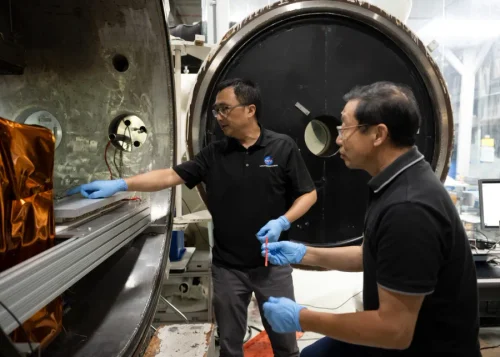
The prototypes are still small cells tested in laboratory conditions. NASA has not published sufficient capacity, voltage or energy-density data to compare them directly with conventional lithium-ion batteries. Their performance under repeated thermal cycles, long-duration operation and actual lunar surface conditions also remains to be established.
The technology could have applications beyond space exploration. NASA researchers are investigating solid-state battery chemistries that can be tailored for different requirements, including energy storage, power delivery and durability. Potential terrestrial applications include electric vehicles, drones and portable electronics, although commercial use would depend on further development, manufacturing and validation.
For India, the technology is relevant to future lunar exploration missions, including the planned Lunar Polar Exploration Mission (LUPEX), a joint undertaking by the Indian Space Research Organisation and the Japan Aerospace Exploration Agency. Chandrayaan-3’s lander and rover were designed for operations during one lunar daylight period, highlighting the challenge of surviving the lunar night. Solid-state batteries that tolerate extreme cold could support longer-duration missions if future testing demonstrates reliable operation under lunar conditions. India’s existing work on space-grade lithium-ion batteries also provides a foundation for research into alternative chemistries and thermal-management approaches for future spacecraft.
For more information, click here.