Turning difficult to recycle waste into an energy providing source is an appreciable step towards solving the pollution crisis
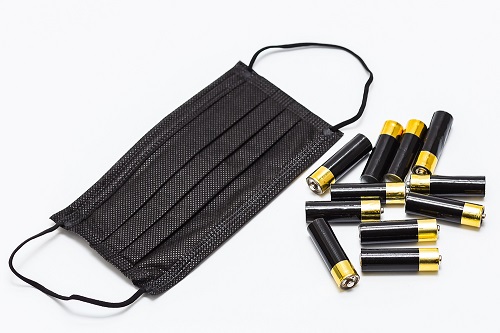
The coronavirus pandemic has affected billions of people around the world. While it continues to wreak havoc, there is no certainty as to when it will end. Wearing face masks and following other safety guidelines is the best way to stay safe in current times.

But have you ever wondered what happens to face masks and other medical waste when disposed? Are they recycled or simply burned (thus emitting toxic gases)? The world is already grappling with pollution problems created by the relentless use of fossil fuels. The unending pile of medical waste, especially used face masks will produce further complications.
But there is a long-term solution. Researchers from the National University of Science and Technology (NUST MISIS), Russia have claimed to devise a technology that can convert medical waste (including face masks) into flexible, cost-effective batteries. And because they have more benefits than traditional metal-coated batteries, applications include household, industrial and more.
“To create a battery of the supercapacitor type, the following algorithm is used: first the masks are disinfected with ultrasound, then dipped in ‘ink’ made of graphene, which saturates the mask. Then the material is pressed under pressure and heated to 140°C (conventional supercapacitor batteries require very high temperatures for pyrolysis-carbonation, up to 1000-1300°C, while the new technology reduces energy consumption by a factor of 10),” said Professor Anvar Zakhidov, scientific director of the infrastructure project ‘High-Performance, Flexible, Photovoltaic Devices Based in Hybrid Perovskites’ at NUST MISiS.
“A separator (also made of mask material) with insulating properties is then placed between the two electrodes made of the new material. It is saturated with a special electrolyte, and then a protective shell is created from the material of medical blister packs (such as paracetamol),” he added.
Pellet batteries created previously using a similar technology had a capacity of 10 watt-hours/kg. The recent development has taken that to 98 watt-hours/kg, providing more energy density and electrical capacity. The addition of nanoparticles of inorganic perovskite of CaCo oxide type to the electrodes has further increased the energy capacity to 208 watt-hours/kg.
The inclusion of graphene boosts the electrical capacity from 1000 farads per gram to 1706 farads per gram, which is high compared to the best-carbonised non-graphene electrodes.
In the future, the scientific team plans to apply the new technology for producing batteries for electric cars, solar power stations and other applications.
Read here for more