


Biocompatibility and biodegradability in functional electronic substances are important features for complying with a variety of healthcare and environmental regulations, as well as reducing the risks associated with managing electronic waste.
Hydrogels, regenerated silk, and polylactic acid (PLA) are examples of bio-based materials that have the potential to revolutionise medical monitoring systems such as sensing devices and wearable electronics. Through rod coating, spraying, or solution immersion, conducting inks created from bio-based composites can be applied directly to any substrate.

A research team from Italy developed an oil-water emulsion PLA-graphene-based printable conducting ink that might be used to create functional covers for consumer electronics and medical diagnostics in this study. The emulsions were made with water as well as biodegradable solvents like anisole. The inks were made by emulsifying different amounts of PLA as a binding agent. To reduce waste, inks were rod-coated over the textiles.
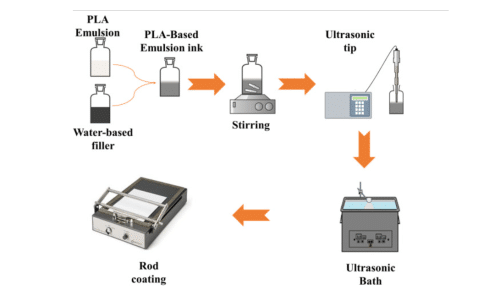
Dynamic light scattering and an optical microscope were used to investigate the emulsion and ink. The results revealed an oil-in-water emulsion with well-distributed PLA and graphene nanoplatelets (GNPs). The inks were used to coat materials during the rod coating process. When compared to the other inks generated, inks with a PLA:GnPs proportion of 1:1 coated the textiles the most consistently, producing the greatest conductance and mechanical properties.
After being subjected to a hot press treatment, the electric conductance of the specimens was raised by a factor of two, according to the findings. Furthermore, the hot-pressed specimens had better mechanical properties due to more PLA binder immersion in the weave.

Covered specimens retained electric conductivity even after being exposed to many stretch-release rounds in strain tests. The disintegration of GnPs’ conducting networks could be to blame for the drop in electric conductance observed near the end of the 100-cycle load test. Printed inks were also abrasion and washing resistant while maintaining their conductivity.
This biodegradable polymeric ink could be used as a strain gauge for converting some electronic modules to biodegradable alternatives. The entire study can be found here.