





HomeEngineering Projects For YouDesigning a Li-Fi System for Wireless Data Transfer

Designing a Li-Fi System for Wireless Data Transfer [Step-by-Step Guide]

EFY Tested Li-Fi Project stamp

Light fidelity (Li-Fi) is a widely adopted form of wireless communication that uses optical energy to verify device functionality. A key challenge lies in establishing communication between two heterogeneous devices over extended distances, especially under full daylight conditions.

To capture the laser module’s intermittent light transmission on video, the BITDELAY is intentionally set to 10ms. For data transmission, however, a 2-3ms BITDELAY has been tested and proven effective. Reducing it to 1ms leads to errors and the loss of alphanumeric characters.

POC Video Tutorial

The system has been validated to sustain reliable communication across a 152cm (60-inch) distance between the transmitter (Tx) and receiver (Rx) modules, even in bright lighting.
- Advertisement -
Li-Fi Transmitter and Receiver Using Laser Diodes
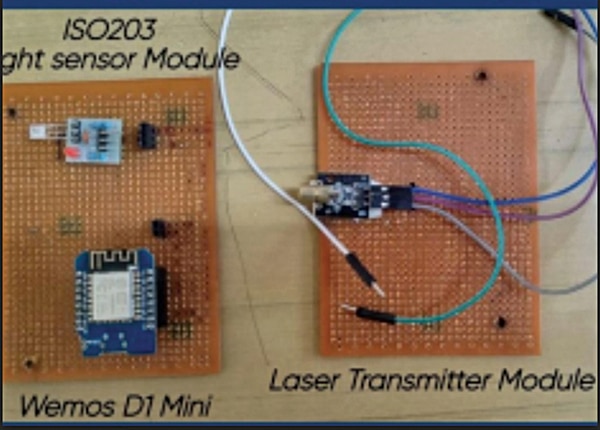
Fig. 1: Authors’ prototype of Li-Fi Transmitter and Receiver Module

The setup confirms the viability of using different microcontrollers—for instance, an ESP8266-based WeMos D1 Mini at the transmitter end and another ESP8266 module at the receiver end. To introduce heterogeneity, other combinations such as ESP8266 with Arduino, ESP32 with ESP8266, nRF with ESP8266, or STM32 with Arduino may also be employed.
Li-Fi Communication Block Diagram
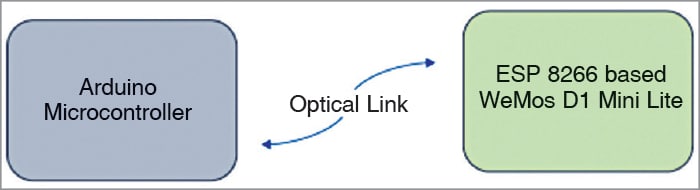
Fig. 2: Block diagram representation of the setup

Fig. 1 displays the authors’ prototype through key visuals, while Fig. 2 outlines the system’s block diagram. The components used are listed in the Bill of Materials Table 1.

- Advertisement -
Table 1: Bill of Materials
ComponentsDescriptionQuantity
WeMos D1 MiniFor programming of Rx1
WeMos D1 MiniFor programming of Tx1
ISO 203 Rx ModuleTo receive the data bit sequence1
Laser Tx moduleTo transmit the data bit sequence1
Jumper wiresMale-female jumper wires to connectAs required

Li-Fi Transmitter and Receiver Circuit and Working

The circuit is relatively simple. Fig. 3 shows the combined circuit diagram of transmitter and receiver based on WeMos D1 Mini. On the left side is the receiver circuit, and on the right side is the transmitter circuit with the laser diode (see Fig. 3). Refer to Table 2 for board label specifications and pin functions of the microcontrollers.


EFY Icon

EFY++ CONTENT: ACCESS TO THIS CONTENT IS FREE! BUT YOU NEED TO BE A REGISTERED USER.

Oops! This is an EFY++ article, which means it's our Premium Content. You need to be a Registered User of our website to read its complete content.

Good News: You can register to our website for FREE! REGISTER NOW

Already a registered member? If YES, then simply login to you account below. (TIP: Use 'forgot password' feature and reset and save your new password in your browser, if you forgot the last one!)

Dr. Geetali Saha, Faculty, GCET, Gujarat
Dr. Geetali Saha is a researcher and technologist specializing in time series forecasting, data mining, and the intersection of electronics, IoT, and environmental sustainability. She holds a Ph.D. in Time Series Forecasting and has a strong focus on applying data-driven insights to real-world challenges, particularly in water systems, climate resilience, and sustainable development. Her work reflects a deep commitment to advancing education, innovation, and environmental stewardship in India. Dr. Saha has contributed to several impactful projects, including EU-funded ERASMUS initiatives on inclusive and equitable education for higher education institutions in India. She has also led and supported technology-driven projects such as smart helmets, agri-drones, and water-focused innovations funded by government-backed programs. Recognized globally for her contributions, Dr. Saha is an approved Ocean Expert under UNESCO’s Intergovernmental Oceanographic Commission (IOC) and an active stakeholder in the UN Ocean Decade initiative aligned with SDG 14: Life Below Water. She has participated as a delegate at multiple COP summits and is actively involved in international working groups focused on ocean observation, hydrography, climate communication, and plastic pollution. In addition, she is a life member of professional bodies such as the Indian Meteorological Society and the Indian Society for Technical Education. Her work continues to bridge technology, sustainability, and education, with a strong emphasis on empowering the next generation through innovation and knowledge.

SHARE YOUR THOUGHTS & COMMENTS

EFY Prime

Unique DIY Projects

Truly Innovative Electronics

Electronics News

Latest DIY Videos

Electronics Components

Electronics Jobs

Calculators For Electronics
