From fuel injection and ignition control to diagnostics and ECU communication, this reference design brings key engine management functions together for engineers to test and develop.
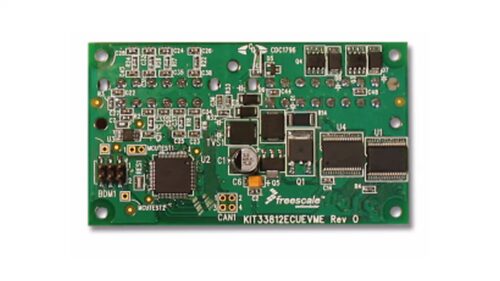
Developing an electronic control unit (ECU) for small engines requires engineers to manage fuel injection, ignition timing, sensor inputs, diagnostics, and power management while meeting automotive reliability requirements. The S12P and MC33812 Small Engine Control Reference Design from NXP Semiconductor provides a starting point for engineers working on these challenges by combining a microcontroller-based control platform with dedicated engine driver circuitry.
The reference design can be used to develop ECU solutions for applications such as motorcycles, scooters, generators, lawn and garden equipment, pumps, and other small-engine systems. By integrating the S12P microcontroller with the MC33812 engine control driver, the platform provides the hardware needed to control both fuel injection and ignition functions.
One of the primary uses of the reference design is rapid prototyping of electronic fuel injection (EFI) systems. Engineers can use the injector driver circuitry to control fuel delivery based on operating conditions. The platform enables developers to create and test fuel maps, optimize injection timing, and evaluate engine performance before moving to a custom hardware design.
The design also supports ignition control development. Engineers can implement spark timing algorithms, evaluate ignition strategies, and test different operating scenarios. With built-in ignition driver support and fault monitoring capabilities, developers can validate ignition system behavior while monitoring for abnormal operating conditions.
Another area where the reference design can be valuable is engine sensor integration. The S12P microcontroller can process data from sensors such as crankshaft position sensors, throttle position sensors, temperature sensors, and pressure sensors. Engineers can develop and validate control algorithms that use these inputs to improve engine operation, emissions performance, and fuel efficiency.
The platform can also serve as a development environment for diagnostics and fault detection. The integrated watchdog, fault monitoring functions, and communication interfaces allow engineers to implement diagnostic routines that detect issues in ignition, injection, and power management circuits. This capability is useful for designing systems that require maintenance alerts, fault logging, or service diagnostics.
For engineers working on connectivity and calibration tools, the reference design includes support for automotive communication through a K-Line interface. This allows the development of calibration software, diagnostic applications, and service tools that communicate with the ECU during testing and field operation.
The reference design can also be used as a learning platform for engineers new to engine management electronics. Because it combines power drivers, microcontroller control, communication interfaces, protection circuits, and engine control functions on a single platform, it provides a practical environment for understanding how modern engine control systems are implemented.
In addition, the hardware can serve as a foundation for custom ECU development. Engineers can evaluate circuit topologies, study power supply implementation, examine protection methods, and reuse proven design concepts when creating production-ready controllers. This can reduce development effort and shorten design cycles.
NXP has tested this reference design. It comes with a bill of materials (BOM), schematics, assembly drawing, printed circuit board (PCB) layout, and more. The company’s website has additional data about the reference design. To read more about this reference design, click here.