How close are we to seeing smart aerial mobility move from science fiction to everyday reality, transforming defence, disaster relief, and high-altitude logistics? At BonV Aero, Gaurav Achha is making that leap a reality through advanced drones built to reshape logistics, defence, and emergency response.
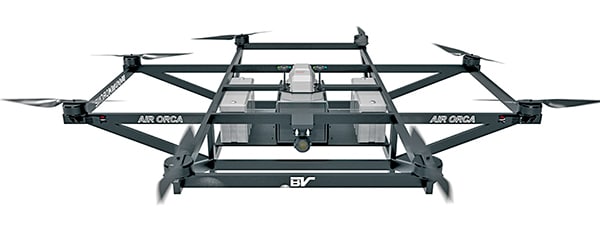
BonV Aero, an Indian R&D company co-founded by Gaurav Achha, focuses on heavy-lift aerial mobility platforms that address the logistical challenges faced by the Indian Army across the Himalayas.
The Indian Army operates across high-altitude regions such as Leh, Ladakh, and Arunachal Pradesh, where essential supplies have traditionally been carried by mules. BonV Aero’s drones, including the Air Orca and other platforms, are designed to carry up to 20kg of cargo, such as rations, ammunition, and equipment, at altitudes of up to 18,000 feet (approx. 5500 metres). These drones are also being explored for disaster relief and commercial applications, including supply logistics in hilly pilgrimage sites and maritime operations.
The company’s focus on high-altitude performance addresses several complex technical challenges. Thin air at extreme altitudes reduces propeller efficiency, while gusty winds and low temperatures strain conventional motors. BonV Aero has developed its propulsion system, optimised for high-altitude thrust, and a distributed electric system that maintains stability even if a motor fails mid-flight. A ballistic parachute provides additional safety in the unlikely event of multiple failures. Adaptive flight software monitors payload, weather, and other variables in real time to ensure reliable and stable operations.

AI plays a vital role in BonV Aero’s platforms. Machine learning algorithms analyse vibration signatures and harmonics to predict maintenance needs before failures occur. Computer vision enables drones to detect obstacles, identify safe landing zones, and operate effectively in low-visibility conditions. These capabilities distinguish BonV Aero’s drones from conventional photography or recreational drones, which are not built to handle heavy payloads or extreme environmental conditions.
The company has a dedicated R&D team at its Bhubaneswar headquarters, with expertise spanning aerospace, robotics, electronics, and automotive engineering. BonV Aero collaborates with academic and defence institutions such as DRDO, IISc, IITs, and international partners, supporting research in power electronics, communication resilience, and additive manufacturing. These partnerships enable the development of drones capable of operating in GPS-denied or high-interference environments.
BonV Aero’s drones are already in active service with the Indian Army, and pre-orders for additional units are underway. The company operates a small-scale manufacturing facility in Bhubaneswar and has secured land for a larger Drone Mobility Park to support future production and testing. Funding has come from a mix of government initiatives, private investors, and venture capitalists, including Tim Draper, making BonV Aero one of the few homegrown aviation start-ups with international backing.
Government reforms, such as the reduction of GST on drones and the introduction of the Drone Policy 2021, have also facilitated growth by simplifying approvals and reducing production costs. BonV Aero sees itself as part of a broader vision to establish India as a hub for aerial mobility innovation.
Over the next five years, the company aims to expand its role in defence and commercial aerial mobility, with plans for transport-class drones capable of carrying passengers over short distances. Its goal is to combine cutting-edge technology, operational reliability, and scalable manufacturing to deliver drones that can address both strategic and civilian challenges, from high-altitude logistics to disaster relief and urban mobility.