




ifm Electronics Ltd has introduced the LDL400 Inductive Conductivity Sensor, an advanced solution designed to tackle chemical corrosion challenges in various industries.
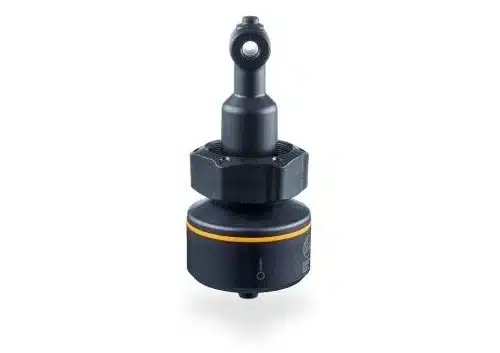
The LDL400 sensor is crafted by ifm Electronics Ltd from durable polypropylene, providing superior resistance to chemical corrosion compared to traditional metallic sensors. This sensor is particularly effective in environments where exposure to aggressive substances such as salt is common. Its wide conductivity measurement range, spanning from 100 to 2 million μS/cm, makes it suitable for diverse industrial applications, particularly in sectors that deal with harsh conditions like water treatment, marine environments, and chemical processing.
Designed for continuous, temperature-compensated measurements, the LDL400 operates effectively within a temperature range of -25 to 50 °C and can withstand pressures of up to 10 bar. Its compact design allows for easy installation in confined spaces such as filter systems and dosing stations. Industries requiring robust monitoring tools, like fish farming, ship automation, and industrial water treatment, will find the LDL400 indispensable for ensuring optimal system performance and maintaining safety.
The sensor employs an inductive measuring principle, offering accurate conductivity detection across its broad measurement range. It delivers reliable, temperature-compensated outputs in both digital and analogue formats. With an M12 connector and IP68/IP69K ratings, the LDL400 ensures secure connections and reliable performance in corrosive or aggressive environments. Whether it is measuring NaCl concentration in ultrapure water or monitoring salt levels in aquaculture, this sensor’s resilience and versatility make it a valuable asset.
According to ifm, the LDL400 excels in providing “precision and reliability, even in challenging conditions such as salty air.” The sensor’s application across various sectors ensures optimal efficiency while enhancing operational reliability in demanding conditions.

