An AI addresses gaps in patient monitoring by accurately tracking sleep posture without cameras or wearables helping detect risks early while preserving privacy.
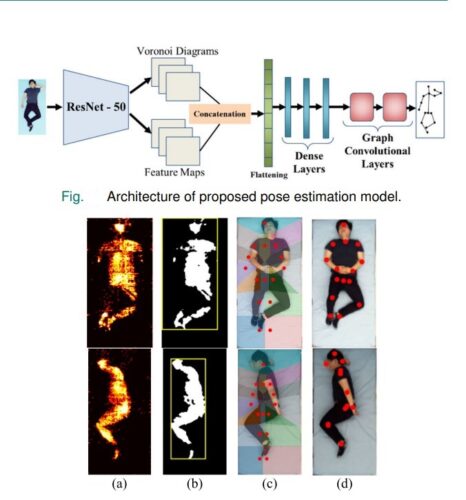
National Institute of Technology Rourkela (NITRKL) has developed an AI-powered system that can track a patient’s sleeping posture with high accuracy, without using cameras or wearable devices. Designed as a contactless and privacy-preserving solution, the system enables continuous monitoring even when a person is covered with a blanket, addressing a long-standing challenge in healthcare settings.
While sleep posture plays a critical role in long-term health, poor positioning for over extended periods can lead to issues such as chronic pain, spinal stress, and sleep apnea, particularly in bedridden patients. However, existing monitoring methods remain limited, often relying on manual checks, uncomfortable wearables, or camera-based systems that raise privacy concerns and struggle in low-light or obstructed conditions.
The newly developed system offers a more practical alternative. For hospitals, caretakers, and home-care providers, it brings the ability to monitor patients continuously without physical contact or intrusion. It can be embedded into beds, reducing the caretaker’s workload while ensuring consistent tracking of posture-related risks, especially in elderly care and sleep disorder management.
At its core, the system combines three different sensing technologies. A long-wave infrared sensor captures body heat patterns without recording visual images, a depth sensor maps body shape and posture, and a pressure sensor analyses how weight is distributed across the bed. These inputs are processed using a generative AI model along with a graph-based neural network, enabling accurate classification of body positions. In lab testing, the system achieved close to 98 percent accuracy, even under blankets and in low-light conditions.
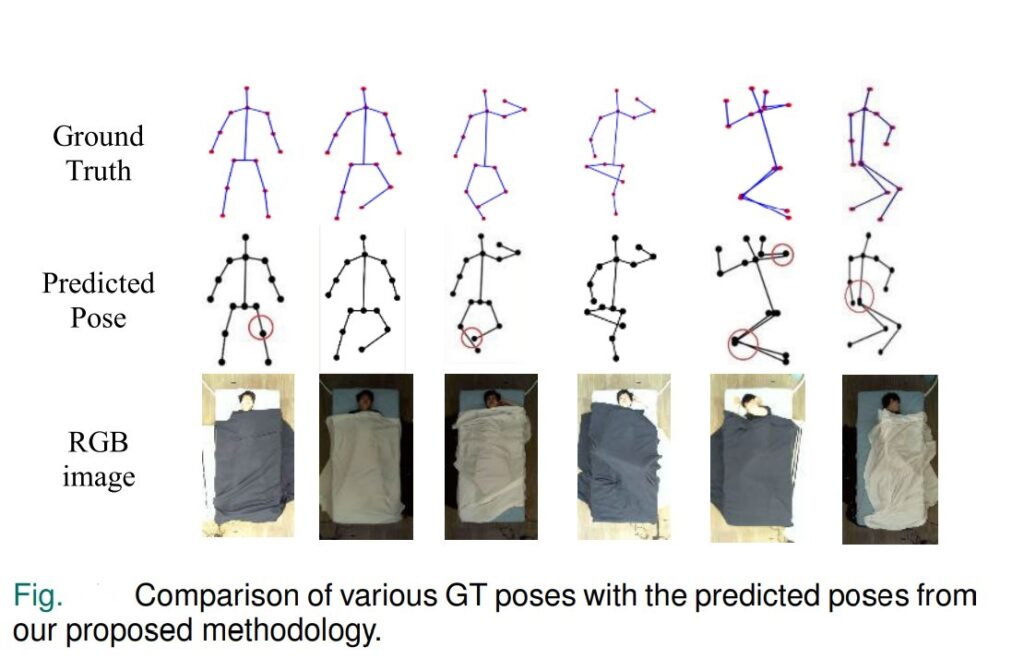
Saptarshi Chatterjee, Assistant Professor, Department of Electronics and Communication Engineering, says, The system can be directly embedded in the bed to monitor the sleeping conditions of hospital patients, elderly individuals, and those suffering from sleep apnoea.”
With further refinement and testing, the technology can move closer to practical deployment across healthcare settings. Its scalability and adaptability can also open possibilities for applications beyond hospitals, including home-based care.