




New EDA approach uses generative and agentic AI to speed semiconductor and PCB development
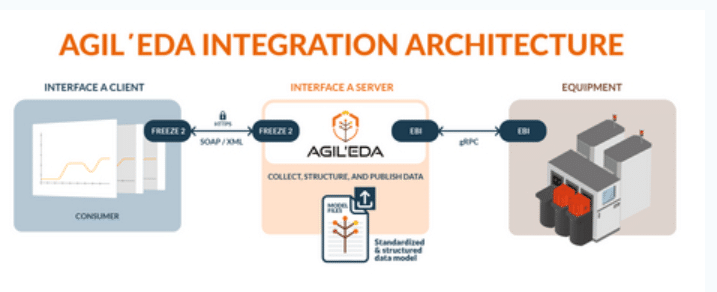
Artificial intelligence is moving deeper into semiconductor design, with a new electronic design automation (EDA) solution aiming to simplify chip development while accelerating time-to-market.
The latest system by Agileo Automation integrates generative and agentic AI directly into chip and PCB design workflows, targeting productivity bottlenecks that have long slowed engineers. By embedding AI into established EDA environments, the platform enables designers to automate complex tasks and explore design options faster without disrupting existing processes.
The key features are:
- Generative and agentic AI integrated into EDA workflows
- Automation of complex and repetitive chip design tasks
- Support for multiple AI models and customizable deployment
- High accuracy, traceability, and reproducibility for manufacturing
- Faster design cycles and improved time-to-market
The development reflects a broader shift in the semiconductor industry, where rising chip complexity and demand for high-performance computing are pushing companies to adopt AI-driven tools. These systems are increasingly being used to handle repetitive design steps, optimise performance, and improve decision-making across the development cycle.
Unlike general-purpose AI, the new approach focuses on “industrial-grade” capabilities tailored for chip design. This includes ensuring accuracy, reproducibility, and traceability—critical requirements in semiconductor manufacturing, where even minor errors can lead to costly failures.
The platform also supports multiple AI models and customizable deployment, allowing engineering teams to adapt it to specific workflows. This flexibility is expected to make it easier for organisations to integrate AI into existing toolchains while maintaining control over data and processes.
As AI continues to reshape chip design, such tools are well-positioned to enable faster innovation cycles. With semiconductor companies racing to meet demand from AI, automotive, and advanced computing applications, the push toward AI-driven EDA is likely to intensify in the coming years.
Click here for the original announcement.

