




A newly engineered breathable hydrogel combines moisture retention with air permeability, enabling longer-lasting wearable sensors, medical patches, and bioelectronic devices while reducing skin irritation during extended use.
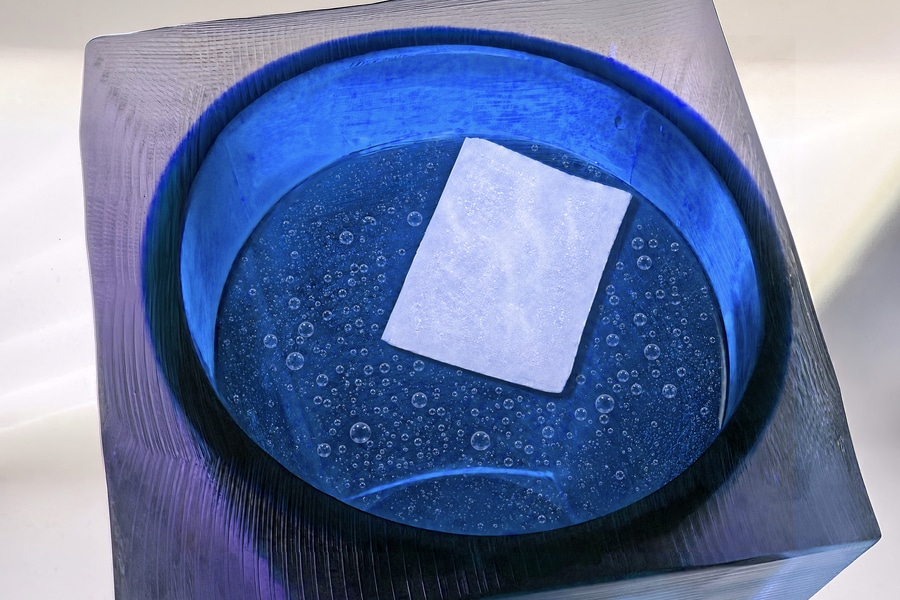
Hydrogels have become a key material for wearable electronics, biomedical devices, and flexible sensors because of their softness, stretchability, and high water content. However, their inability to allow sufficient airflow has limited long-term use, often causing sweat accumulation, skin irritation, and degraded sensor performance. Researchers at MIT have now addressed this challenge by developing an aerated hydrogel that maintains its mechanical properties while significantly improving breathability. The breakthrough could pave the way for more reliable wearable electronics, implantable devices, and medical patches.
The newly developed material integrates microscopic interconnected air channels throughout the hydrogel structure. These tiny tunnels enable oxygen and water vapour to pass through without compromising the hydrogel’s softness, elasticity, strength, or hydration. Unlike conventional hydrogels, which trap moisture against the skin, the aerated design provides continuous ventilation while preserving the intimate skin contact required for accurate sensing and effective adhesion.
To validate the technology, researchers attached wireless heart-monitoring sensors to volunteers using the breathable hydrogel. Participants wore the devices continuously during regular exercise for 10 days. The hydrogel maintained secure adhesion and consistent electrical performance while preventing skin irritation and excessive sweat buildup, demonstrating its suitability for long-duration physiological monitoring.
The innovation has significant implications for next-generation wearable electronics. Many bioelectronic systems—including ECG patches, health-monitoring wearables, flexible biosensors, and skin-mounted communication devices—depend on prolonged contact with the skin for accurate data acquisition. By improving airflow while retaining biocompatibility and mechanical flexibility, the new hydrogel could extend device wear time, improve user comfort, and increase measurement reliability.
Beyond wearable electronics, the breathable hydrogel could benefit medical dressings, drug-delivery patches, implant coatings, contact lenses, cosmetic masks, and other biomedical applications where both hydration and oxygen permeability are essential. The research, published in Nature, demonstrates how advanced materials engineering can simultaneously address biological compatibility and device performance challenges, potentially enabling a new generation of durable, skin-friendly electronic and healthcare technologies.

