




A new electric hatchback can charge from 10 per cent to 70 per cent in five minutes, but the technology depends on dedicated high-power chargers.
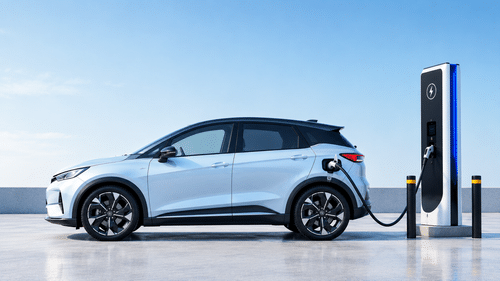
BYD has launched the second-generation Seagull in China, bringing its Flash Charging technology to its smallest and most affordable electric hatchback. The company says the system can charge the battery from 10 per cent to 70 per cent in around five minutes, making charging times closer to those of refuelling a petrol car.
Until now, this charging technology has been limited to larger and more expensive models in BYD’s line-up. Bringing it to a car that starts at 65,900 yuan, roughly US$9,800, moves the technology into the budget segment, where most first-time EV buyers shop.
The new Seagull is available in five trims, priced between 65,900 to 99,900 yuan (about US$9,800). However, Flash Charging is available only on the top three trims, starting at 75,900 yuan.
Buyers can choose between two battery packs. The 30.1 kWh, with a claimed range of 320 km on China’s CLTC test cycle, and 39.2 kWh, with a claimed range of 420 km. The Flash Charging trims use the Larger battery pack.
The new model also gets more motor power, rising to 85 kW on the entry-level trims and 95 kW on the Flash Charging trims, up from 55 kW on the outgoing car. The car also has a larger body that accommodates five occupants and a front boot. Private buyers of Flash Charging trims receive 12 months of free charging at BYD Flash Charging stations.
Charging speed depends on two factors: how much power the charger can deliver and how quickly the battery can safely accept it. BYD’s Flash Charging system pairs a battery designed to handle very high currents with the company’s own megawatt-class chargers. Charging 60 per cent of a 39.2 kWh battery pack means putting about 23.5 kWh into the battery in five minutes. That works out to an average of roughly 280 kW during the session. The charging rate is highest in the middle of the battery’s charge range, which is why BYD quotes 10 per cent to 70 per cent rather than 0 per cent to 100 per cent.
On a 60 kW public fast charger, the same 23.5 kWh would take roughly 25 minutes to charge. A 7.4 kW home wall box would take more than three hours. In comparison, filling a petrol car’s tank takes about five minutes at the pump. The Seagull’s claimed charging time brings a budget EV in that range for the first time, but only at BYD’s own charging stations.
The car is now on sale in China. The five-minute charging time is BYD’s claim and requires BYD Flash Charging infrastructure. On ordinary chargers, the car charges at ordinary speeds. Flash Charging is currently available only in China. The range figures are based on China’s CLTC cycle, which usually produces higher estimates than real-world driving. BYD has not said whether this Seagull will be sold outside China with Flash Charging. Earlier generations of the car have been exported under the names such as Dolphin Mini and Dolphin Surf depending on the market.
BYD sells several larger EVs in India, but the Seagull has not yet been announced for the Indian market. Depending on exchange rates, the Flash Charging trims would cost roughly ₹9 lakh before Indian duties and taxes. This would put the car in a similar price range to some of India’s best-selling small EVs. However, bringing the car to India would involve more than just pricing. The bigger challenge is the charging infrastructure. A station that delivers several hundred kilowatts to a single car needs a grid connection with far greater capacity than that available at most Indian public charging stations today. Import duties on completely built-up cars would also push the final price well above the Chinese sticker price.
For Indian buyers, five-minute charging will arrive only when the compatible chargers are available, and that is as much a question of the electricity grid and policy as it is of battery technology.
For more information, click here.

