




Could programmable microbubbles help tiny robots move fluids, steer through confined spaces? A chip can now deliver medicines more precisely without bulky bubble-trapping mechanisms?
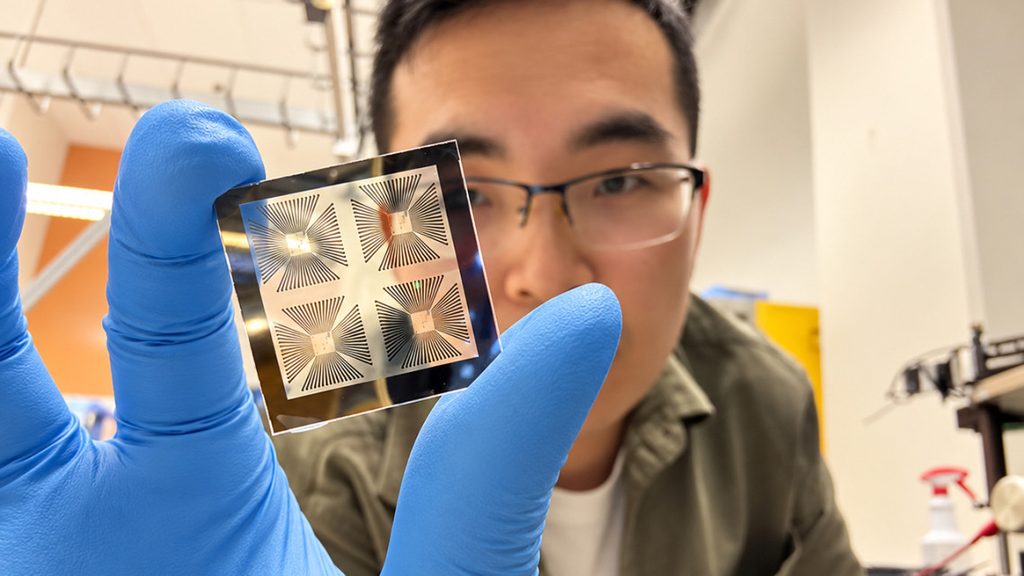
Researchers at Cornell University have developed a chip-based platform that generates and directs hydrogen microbubbles on demand, enabling programmable fluid movement for potential applications in microrobotics and targeted drug delivery.
The platform can generate different flow patterns by activating selected electrodes and tuning the bubbles’ resonant behaviour. A single bubble can create local fluid movement, while pairs of bubbles with different sizes can produce an asymmetric flow, directing liquid towards one side. Arrangements of three or five bubbles can generate horizontal, diagonal or curved flows. The researchers also demonstrated a bubble-shooting function that propels bubbles in a chosen direction using ultrasound.
The system’s programmable operation could help develop reconfigurable microfluidic devices, which manipulate small volumes of liquid for applications such as laboratory testing and medical treatment. In targeted drug delivery, for example, controlled fluid movement could eventually help transport therapeutic substances towards specific locations. However, practical medical use would require further development and validation.
The device uses a grid of electrodes within a 3mm area to generate bubbles measuring 10–100 microns. By controlling the voltage applied to each electrode, researchers can adjust bubble size, while ultrasound drives the bubbles into resonance, creating fluid flows around them. The approach eliminates the need to trap and manipulate pre-existing bubbles, offering greater flexibility in controlling their position, size and number.
The platform also offers a way to address unreliable bubble operation. If a bubble fails to function as intended, it can be detached and regenerated at the required electrode, rather than requiring the device to capture another bubble.
The team plans to explore integrating bubble-generating circuits into robots, potentially enabling compact systems that control fluid movement electronically.
