
A cooling system uses a liquid that boils to carry heat away from electronic chips and prevent overheating.
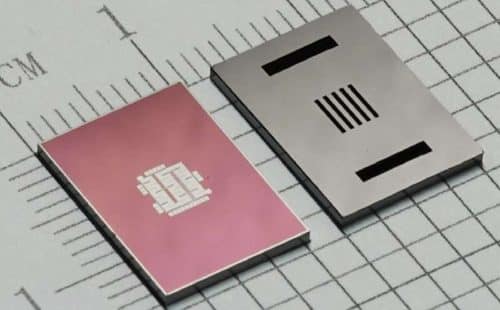
Researchers at Peking University have developed a chip cooling system that uses an electrically insulating liquid to remove heat through boiling. The system reached a critical heat flux of 1,570 watts per square centimetre in tests, offering a way to cool electronic chips without using electrically conductive water.
The approach uses HFE-7100, a dielectric fluid that absorbs heat as it changes from liquid into vapour. The findings were published in Nature Electronics. The system uses microscopic channels in the chip substrate to bring the coolant close to hot spots, while a manifold supplies liquid and removes vapour.
Heat removal is a challenge for high-power integrated circuits, as excessive temperatures can affect their performance and reliability. Embedded cooling addresses this by carrying coolant through channels near the areas where heat builds up.
Water is often used in such systems because it transfers heat effectively. However, dissolved impurities can make it electrically conductive, increasing the risk of short circuits. Dielectric fluids provide electrical insulation, but cooling systems using them have faced limits in heat removal.
The researchers fabricated the system using techniques compatible with semiconductor manufacturing. Its structure combines microchannels near heated regions with a manifold that distributes coolant and collects the heated fluid.
Horizontal inlets supply liquid HFE-7100 to the channels, while vertical outlets allow vapour to escape. As the liquid absorbs heat, part of it boils. The resulting liquid-vapour mixture exits through the outlets, carrying heat away from the chip.
The researchers reported a critical heat flux of 1,570 W/cm². Critical heat flux is the point at which boiling can no longer remove heat effectively under the tested conditions. According to the paper, earlier approaches using dielectric coolants were often limited to below 1,000 W/cm², even with pre-cooling and pre-pressurisation.
The team attributed the improvement to the manifold design, which supports liquid replenishment and vapour removal. The system could be used for electronic chips that require heat removal close to their active regions. Its use of microelectromechanical systems (MEMS) technology may also allow integration with semiconductor manufacturing processes.
However, the reported result comes from initial tests. Further testing on commercially available chips is needed to establish the system’s performance and reliability during prolonged operation.