With dual SPI capability and 16 bit colour depth, the display can adapt to varying data rate demands without altering the underlying hardware architecture.
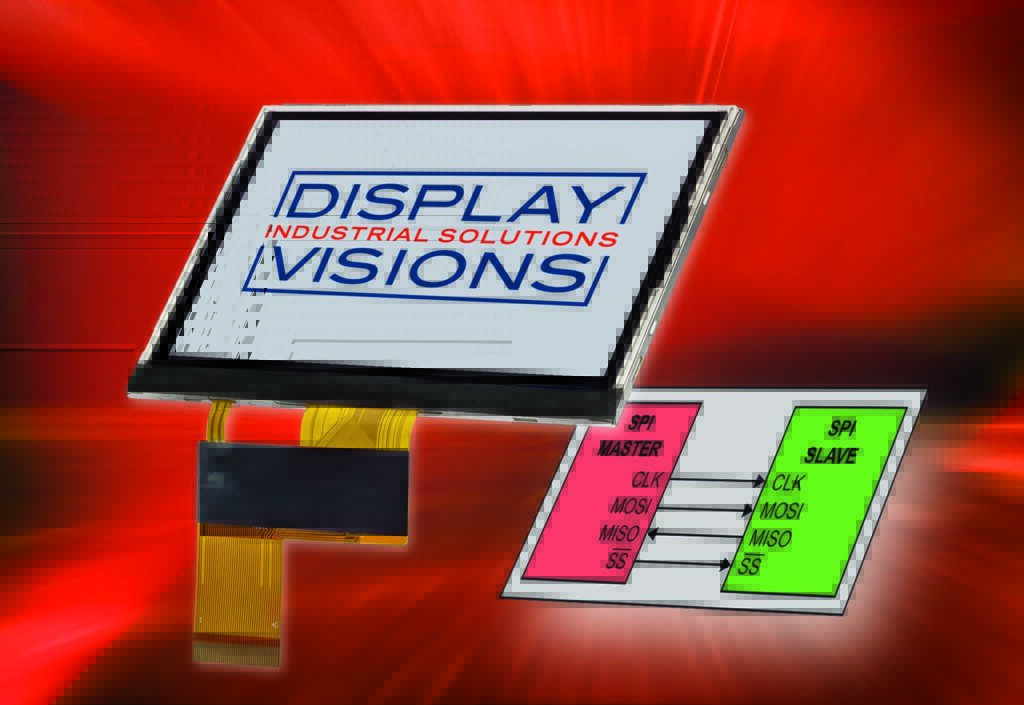
DISPLAY VISIONS has introduced the EA TFT043 42SINN, a 4.3 inch colour display with an SPI interface developed for microcontroller based embedded systems. Addressing the growing demand for compact, cost conscious display modules that can be integrated directly into microcontroller based systems. In many embedded applications, developers seek to balance performance, wiring simplicity, and space efficiency, particularly in handheld devices, control panels, and industrial equipment where board space and pin availability are limited.
Serial Peripheral Interface, or SPI, is frequently chosen in such designs due to its high data rates, full duplex communication, low latency, and reduced wiring requirements. By minimising the number of signal lines compared to parallel interfaces, SPI can simplify PCB layout and reduce overall system complexity. The integrated SPI bus in the EA TFT043 42SINN can be configured as a 3 wire, 4 wire, or dual SPI interface. The dual SPI mode enables a doubled transfer rate, allowing designers to adapt communication performance according to application needs without changing the core display module.
The display offers a resolution of 480 by 272 pixels and supports up to 65,535 colours with 16 bit colour depth. This specification allows the presentation of detailed graphical user interfaces, icons, and status information in embedded systems. IPS technology is incorporated to maintain stable contrast and colour representation across wider viewing angles. In addition, a backlight rated at 1,100 cd per square metre supports readability in bright ambient light conditions, which can be relevant for outdoor or strongly illuminated indoor environments.
From an electrical standpoint, the display operates at a logic supply of 3.3 V, while the backlight requires approximately 12 V at 60 mA. The specified operating temperature range of minus 20 degrees Celsius to plus 70 degrees Celsius supports use in industrial and semi industrial conditions where temperature variation must be considered during system design.