




An ESP32-C3 and 128×64 OLED combine into a compact desk clock with nine retro animations and live PC temperature and performance data.
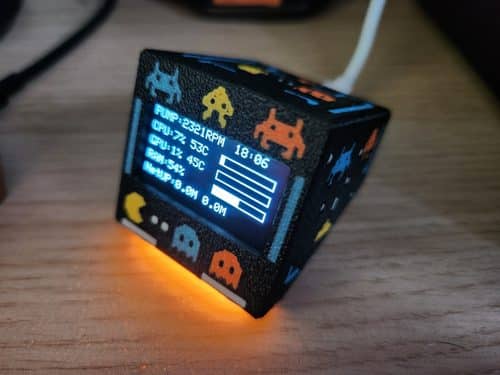
An ESP32-C3 board smaller than a postage stamp can turn a cheap OLED screen into a retro desk clock, with Pac-Man, Mario and Space Invaders-style animations showing the time. The open-source SmallOLED project, published on 23 September 2026, can also display live PC data such as temperatures, loads and fan speeds when the computer is running.
The project by Keralots uses an ESP32-C3 with a 128×64 monochrome OLED. It supports 12 clock styles, including nine retro arcade animations featuring Mario, Space Invaders, Arkanoid, Pac-Man, Snake, Tetris, Asteroids, Dino Runner and TRON. The display can sync time over Wi-Fi and switch between clock, PC-monitoring and audio-visualisation modes.
The clock supports OLED displays ranging from 0.96 to 2.42 inches, including SSD1306, SH1106, CH1116 and SSD1309 variants. When paired with a Windows or Linux PC, the same screen can show up to 20 live readings, including CPU and GPU temperatures, load, fan speed and network traffic.
The build uses an ESP32-C3 SuperMini paired with a 128×64 I2C OLED. A TTP223 capacitive touch module can be added for switching modes, while an optional 27 × 27 mm carrier PCB and 3D-printable enclosure provide alternative ways to assemble and house the device. A USB-C cable and jumper wires complete the basic setup.
The ESP32-C3 fetches the time over Wi-Fi using the Network Time Protocol (NTP) and draws the animations pixel by pixel in code rather than loading stored images. According to the builder, the project uses no bitmaps or game ROMs, helping keep the firmware compact while avoiding the use of original game artwork.
For PC monitoring, a companion application reads hardware data through LibreHardwareMonitor on Windows and sends it to the ESP32-C3 over the local network. The device also hosts a web interface for configuration and provides an HTTP interface for integration with home-automation tools.
Building the SmallOLED involves wiring the I2C display to GPIO 8 and GPIO 9 on the ESP32-C3, with 3.3 V and GND providing power. An optional touch button can be connected to GPIO 7, while an LED can use GPIO 1. The firmware can be flashed through the SmallOLED Web Flasher in Chrome or Edge without the Arduino IDE. After entering the Wi-Fi credentials, users can access the device through its IP address or smalloled.local to select a clock style.
For PC-stats mode, the companion application uses LibreHardwareMonitor to read system sensors and can send up to 20 selected readings to the display. The Windows version requires administrator access for hardware monitoring, while the web flasher requires a Chromium-based browser.
The project supports configurable five-row, six-row, or larger two- and three-row layouts. It also includes an audio spectrum visualiser, scheduled dimming and JSON-based settings export. Since the displays are small and monochrome, a 1.3-inch or larger panel may be easier to read from a desk. Power consumption and display refresh rate have not been specified by the builder.
The firmware, Windows and Linux companion applications, and 3D-printable case files are available in the SmallOLED-PCMonitor GitHub repository. Prebuilt binaries are provided through the Releases section, while firmware can also be updated over Wi-Fi. The repository provides the files needed to modify and extend the project without requiring users to start from scratch.
The project uses readily available maker components, including the ESP32-C3 SuperMini and standard I2C OLED displays. Its low-cost hardware makes it suitable as a compact IoT project for engineering students and hobbyists, while the PC-monitoring mode could also appeal to users who want a dedicated display for system temperatures and other hardware statistics.
For an Indian student with a spare evening and around ₹1000, the project can serve as a practical introduction to Wi-Fi connectivity, I2C displays and home-network APIs in one build. The final cost should, however, be confirmed against current Indian component prices.
For more information, click here.
