




A camera project built around a compact ESP32-S3 board adds autofocus, digital zoom and power-failure-resistant timelapse recording to Prusa 3D printers.
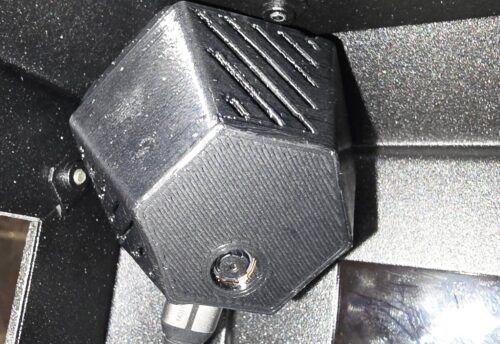
Monitoring a 3D printer while it runs for hours or overnight is not always convenient, especially when users are away from the machine. To address this issue, developer Sam Lovick has developed a compact camera system for the Prusa Core One. It uses a Seeed Studio XIAO ESP32-S3 Sense board paired with a 5MP autofocus camera. Its open-source firmware links the camera to Prusa Connect and allows users to view print progress remotely and capture the timelapse footage.
The setup uses an ESP32-S3 board, an OV5640 autofocus camera, a microSD card and a custom 3D-printed PETG holder. The assembly attaches to the printer using three magnets. On the firmware side, it has autofocus, up to 4× digital zoom with pan and tilt, exposure lock and timelapse capturing. Rather than providing a continuous streaming, the camera sends periodic images to Prusa Connect to update the print progress.
The autofocus camera needed a firmware blob to operate its internal controller. The microSD support needs some alterations to address the shared pin usage, task stack limits and card initialisation delays. With these changes, the system saves timelapses as MJPEG AVI files. The recordings remain playable up to the last saved frame even when the power is lost.
The project uses Arduino IDE and Espressif’s ESP32 Arduino core. Before uploading the firmware, users need to enter the Wi-Fi credentials, printer address and Prusa Connect camera token. A local Wi-Fi setup interface is also available in camera for configuration. The fixes made enabled the autofocus, SD card mounting and digital zoom work. However the project doesn’t include the detailed frame-rate, power consumption and wireless range measurements.
The firmware is released under the GPL-3.0 licence. It allows developers to inspect, modify and adapt the code. The repository also mentions some other supported ESP32 camera boards, though the autofocus setup demonstrated here uses the XIAO ESP32-S3 Sense with the OV5640.
For more information, click here.

