Robots are changing warehouses. A new wave of edge computing is supporting industrial automation and enabling communication between machines, sensors, and systems.
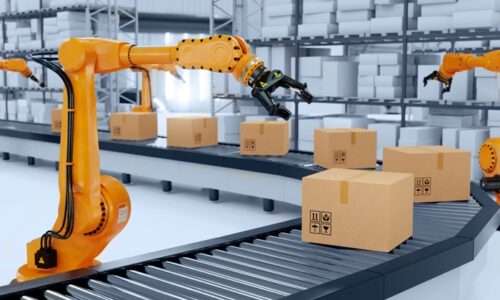
The global surge in warehouse automation, autonomous robotics and industrial IoT deployments is rapidly reshaping demand for embedded computing hardware, as manufacturers increasingly require rugged, low-power systems capable of operating reliably in harsh industrial environments.
In a recent conversation, Ron Eisworth, Executive VP of Sales & Marketing at Gateworks, highlighted smart warehouses and robotic logistics systems as key growth drivers for industrial computing platforms — especially at the network edge, where machines, sensors, and autonomous vehicles depend on continuous low-latency connectivity.

“There’s a lot of ongoing improvement in warehouses and automation,” said Ron. “Robotic warehouse delivery systems or robots that move pallets around all require communications infrastructure, usually through Wi-Fi or other wireless technologies.”
The rise of autonomous mobile robots (AMRs), automated guided vehicles (AGVs) and AI-enabled logistics systems is creating fresh demand for compact embedded computers that can process data locally while supporting multiple communication standards simultaneously.
Unlike traditional enterprise IT infrastructure, industrial embedded systems are designed to operate continuously in environments exposed to vibration, unstable power conditions, dust and extreme temperatures. This has made ruggedization, thermal efficiency and long lifecycle support critical differentiators in industrial deployments.
Ron added, “Modern warehouse and factory automation systems increasingly rely on edge computing architectures where processing happens closer to the machine rather than entirely in centralized cloud servers. That shift is driving adoption of ARM-based embedded systems because of their lower power consumption and thermal efficiency.”
Industry demand is also evolving beyond simple connectivity. Modern industrial systems now require integration of multiple wireless technologies — including Wi-Fi, 5G, GNSS and emerging long-range protocols such as Wi-Fi HaLow — to support autonomous robots, remote sensors and industrial monitoring platforms.
Warehouses, transportation hubs and manufacturing facilities are increasingly deploying distributed networks of connected devices that must communicate in real time while maintaining low power consumption and long operational lifecycles.
At the same time, embedded hardware manufacturers are balancing increasing compute requirements with long-term reliability expectations. Industrial customers often expect hardware platforms to remain available for more than a decade because certifications and deployment cycles in sectors such as transportation, energy and factory automation can take years.
According to Ron, the next generation of industrial embedded systems will likely combine higher-speed networking, AI acceleration and modular wireless connectivity into compact edge platforms designed for autonomous operations.
As factories and warehouses become more digitized, embedded computing is increasingly moving from a background infrastructure component to a central technology layer powering real-time industrial automation.