




A dual-mode magnetic elastomer that can move on command and self-destruct when triggered, opening new possibilities for transient electronics, soft robotics, and secure electronic systems.
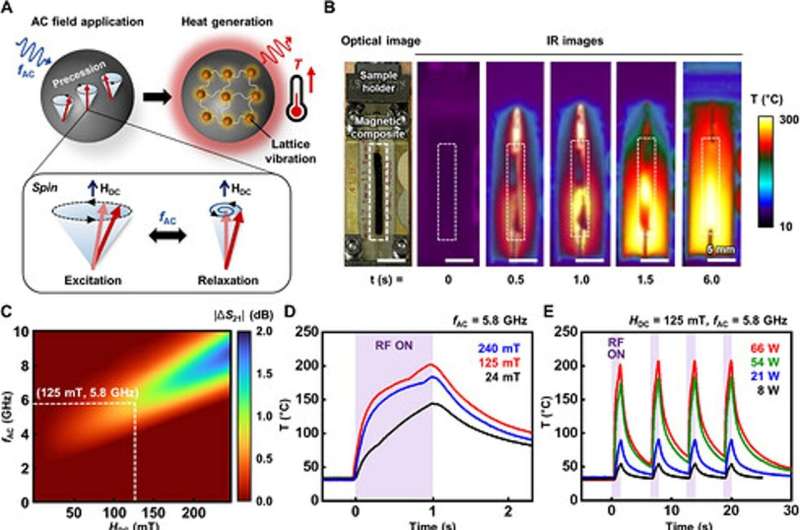
A team of engineers at Seoul National University has developed a dual-mode magnetic elastomer capable of both mechanical actuation and controlled self-destruction using different magnetic fields, a breakthrough that could influence the next generation of soft electronics and intelligent devices.
The material combines a silicone elastomer matrix with iron oxide (Fe₃O₄) magnetic nanoparticles, enabling two distinct operating modes within a single platform. Under a direct-current (DC) magnetic field, the elastomer changes shape and performs controlled movements, making it suitable for soft robotic systems and adaptive electronic components. When exposed to a high-frequency alternating-current (AC) magnetic field, the same nanoparticles generate intense heat, rapidly breaking down the material structure.
Researchers reported that the AC magnetic field can raise the material’s temperature above 200°C in less than a second, triggering fast degradation without requiring external heaters or light-based activation systems. This approach allows electronic devices or robotic components to be remotely removed after completing their intended tasks.
The development addresses a growing challenge in soft robotics and embedded electronics. Devices designed for operation inside confined or inaccessible environments—such as industrial pipelines, underground infrastructure, hazardous facilities, or medical settings—can be difficult to retrieve after deployment. Leftover hardware may create contamination risks, mechanical failures, or security concerns.
Unlike existing systems that often rely on separate mechanisms for motion and disposal, the new elastomer uses a single magnetic stimulus platform. Switching between DC and AC magnetic fields determines whether the material performs work or initiates degradation, simplifying system design and reducing hardware complexity.
The research reflects broader momentum in magnetic soft materials, which are increasingly being explored for soft robotics, biomedical devices, and adaptive electronics due to their fast response times and wireless controllability.
If commercialized, the technology could support temporary sensors, disposable electronic systems, secure hardware, and mission-specific robotic devices that disappear after use, reducing electronic waste while improving operational safety.


