What happens when electronic systems face high-power microwave radiation? An evaluation platform can reveal how electronic equipment responds.
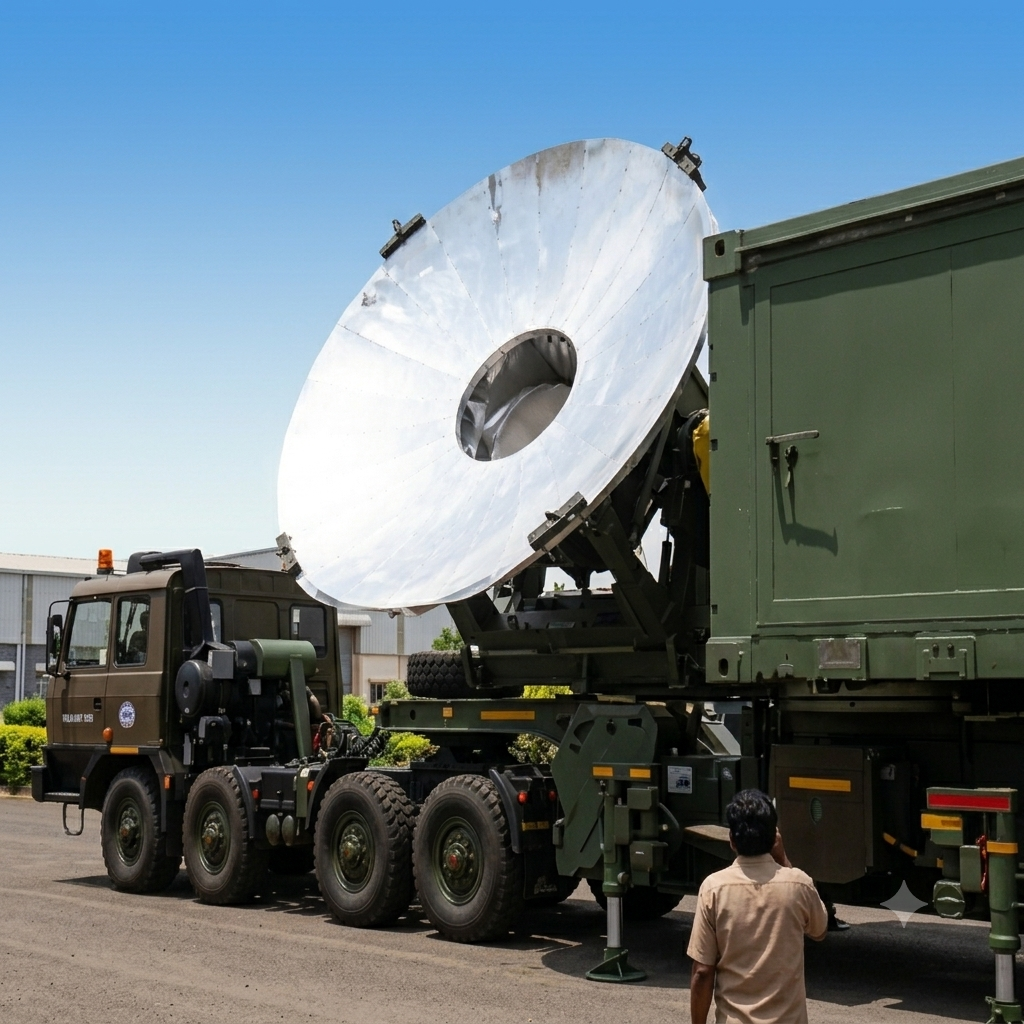
The Defence Research and Development Organisation (DRDO) has issued a proposal for SHIELD, an S-band High-Power Microwave Integrated Evaluation System for Lethality and Damage. The system is designed to evaluate how electronic equipment responds to high-power microwave radiation under controlled conditions.
The platform is aimed at testing electronics such as communication equipment, sensors, and control systems that could be exposed to intense electromagnetic radiation. By providing a dedicated evaluation setup, it can help quantify damage and establish benchmarks for electronic-system survivability.
At the heart of SHIELD will be Gallium Nitride (GaN)-based Solid State Power Amplifier (SSPA) technology. GaN-based power electronics can provide high power density and efficiency, making them suitable for compact high-power RF systems where both output performance and thermal constraints need to be managed.
The system is expected to produce a peak far-field electric field strength of at least 3 kV/m. It will operate in pulsed mode with flexible duty cycles, allowing different high-power microwave exposure conditions to be simulated during evaluation.
Thermal management is also being built into the platform to support sustained operation. Managing heat becomes particularly important in high-power RF systems, where power amplification can place significant thermal demands on the electronics.
The modular architecture is intended to allow the system to be adapted across different testing and operational environments. A drone-mountable configuration is also proposed, enabling the platform to be carried on an airborne system for mobile testing and demonstrations.
By combining GaN-based solid-state amplification, pulsed high-power microwave generation, high-field exposure, and mobile deployment, SHIELD is designed to provide a way to test whether critical electronics can withstand emerging electromagnetic threats.
The platform could ultimately support the development of both more resilient electronic systems and countermeasures by giving researchers a controlled environment to measure how equipment behaves under high-power microwave exposure.