An unexpected laboratory finding has revealed a way to produce a key nanomaterial generating a valuable industrial output at the same time.
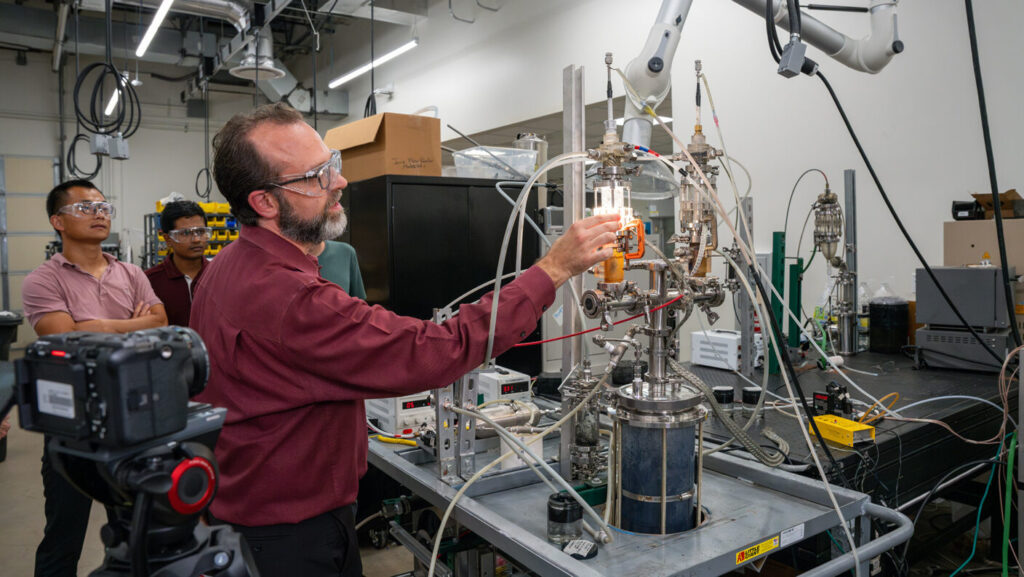
Researchers at Texas A&M University have developed a new method for producing graphene oxide directly from methane using a nonthermal plasma water interface. Reported in Nature Communications, the process converts natural gas into high purity graphene oxide while simultaneously generating hydrogen, offering an alternative to conventional graphite based manufacturing.
The discovery emerged during a project originally focused on hydrogen production. As the research progressed, the team found that the carbon byproduct was actually graphene oxide, a material widely used in lithium ion batteries, electronics, coatings, composites, and advanced manufacturing. Because the process starts with methane instead of mined graphite, it could reduce dependence on conventional supply chains while lowering production costs.
The technique uses an electrical plasma discharge to assemble graphene oxide from methane molecules rather than breaking down bulk graphite through chemically intensive processes. The researchers demonstrated scalable production under atmospheric conditions, producing high purity, single layer graphene oxide with properties comparable to commercially available materials. At the same time, the process generates hydrogen and converts carbon into a functional material instead of releasing it as carbon dioxide.
The work also reflects growing interest in producing high value carbon nanomaterials from petrochemical feedstocks. Graphene oxide’s ability to disperse in water makes it suitable for applications such as conductive inks, coatings, and other advanced manufacturing processes. The researchers believe the approach could strengthen domestic production of carbon nanomaterials while supporting future developments in energy storage and electronics.

“This is a pathway to create energy and advanced materials at the same time. The goal is to develop solutions that make economic sense while also reducing emissions,” says David Staack, Associate Professor and Deputy Vice Chancellor for Research at Texas A&M University.