




A compact 79GHz millimetre-wave sensing module delivers millimetre-level accuracy, low power operation, and high interference resistance for smarter water-level monitoring systems.
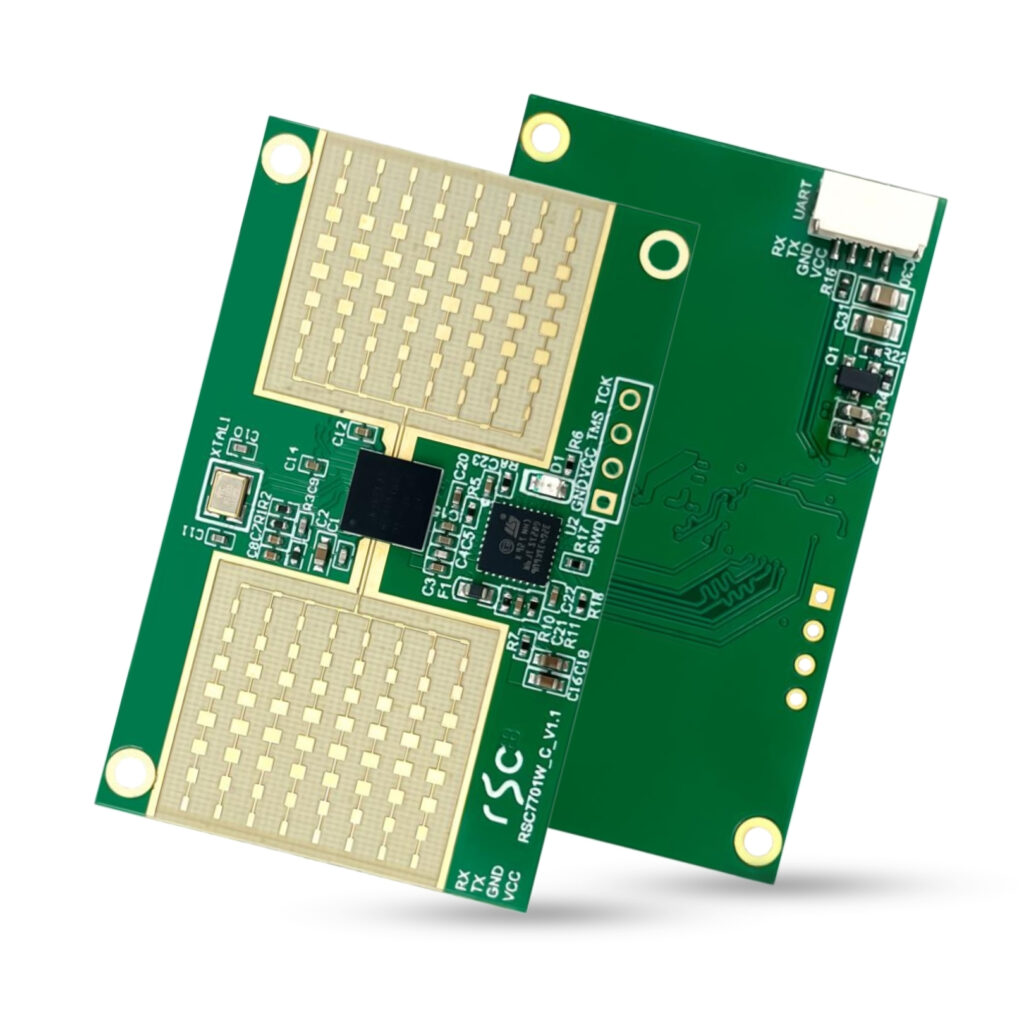
A new millimetre-wave water-level sensing module has been introduced by Rajguru Electronics (I) PVT. LTD. to improve precision monitoring in industrial, smart infrastructure, and IoT-based liquid measurement applications. Built around a 79GHz radar architecture, the compact sensor combines high ranging accuracy with ultra-low power consumption, targeting environments where conventional sensing approaches can struggle with reliability and interference.
The sensor uses frequency-modulated continuous wave (FMCW) technology and supports water-level detection with theoretical ranging precision down to 1mm. By operating in the 79GHz–81GHz band, the module can provide high-resolution measurements while maintaining stable performance across varying environmental conditions.
The key features are:
- 79GHz–81GHz FMCW millimetre-wave radar operation
- Theoretical ranging accuracy of up to 1mm
- Detection range from 0.15m to 15m
- Average power consumption around 0.011W
- Narrow beam design with strong anti-interference capability
One of the key design elements is its narrow-beam architecture, which improves resistance to signal interference and enables long-distance measurement. This approach can be useful in industrial tanks, smart water management systems, reservoir monitoring, and automation applications where surrounding objects and environmental noise often affect sensor performance.
The module integrates a digital signal processor (DSP) and controller on board, enabling advanced radar signal-processing algorithms within a compact footprint. Such integration reduces external processing requirements and simplifies deployment in embedded systems.
Power efficiency also appears to be a major focus. With an average power consumption of approximately 0.011W depending on the sampling period, the device is designed for low-energy operation, making it suitable for battery-powered and remote sensing systems.
The sensor supports UART and high/low-level interfaces for integration with broader electronic systems and controllers. It also operates across a wide temperature range from –20°C to +80°C, allowing deployment in diverse environmental conditions.
As demand for intelligent monitoring systems continues to grow across industrial and infrastructure sectors, millimeter-wave sensing technologies are increasingly being adopted to deliver higher accuracy, reliability, and simpler integration compared to traditional water-level detection approaches. Information derived from the uploaded product specification document.

