

New reference platforms streamline three-phase inverter development, reducing design complexity while accelerating adoption of high-efficiency SiC power modules across EV and industrial systems.
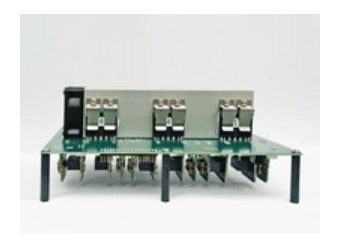
ROHM Co., Ltd. has introduced a new set of silicon carbide (SiC)-based reference designs to accelerate the development of high-efficiency three-phase inverter systems for automotive and industrial applications.
The newly released designs—REF68005, REF68006, and REF68004—target power ranges from 5kW to 100kW, covering use cases such as AC servo drives, HVAC systems, energy storage, EV chargers, and traction inverters. Built around the company’s EcoSiC™ power modules, the designs are intended to significantly reduce engineering effort in evaluation and system integration, particularly in high-power environments where design complexity remains a key bottleneck.
SiC devices are increasingly preferred over traditional silicon due to their higher efficiency, faster switching, and improved thermal performance. However, these benefits often come at the cost of more complex peripheral circuit design and thermal management. ROHM’s latest reference platforms directly address this gap by offering ready-to-use design data, including schematics, layouts, BOMs, and user guides—allowing engineers to move faster from concept to deployment.
Each design supports a specific module configuration: HSDIP20 for low-power applications, DOT-247 for mid-range systems, and TRCDRIVE pack™ for high-power traction applications. All designs are based on a three-phase full-bridge topology and are scalable for systems up to the 300kW class, making them relevant for next-generation electrification platforms.
In addition to hardware design files, ROHM is strengthening its ecosystem by expanding its simulation and validation tools. Engineers can access system-level verification through the ROHM Solution Simulator, along with LTspice models and thermal design support. This integrated approach enables early-stage optimisation and reduces iteration cycles during development.
The company is also making its SiC modules more accessible through online distribution channels, improving availability for prototyping and small-scale production.
With power electronics playing a central role in EVs, renewable energy, and industrial automation, such reference designs are becoming critical enablers. By simplifying SiC adoption, ROHM is positioning itself to support faster deployment of high-efficiency power systems while lowering the overall design burden for engineers.