A new automotive radar SoC integrates sensing and perception processing on a single chip, helping automakers reduce system complexity, power consumption and costs while expanding advanced driver-assistance features to mainstream vehicles.
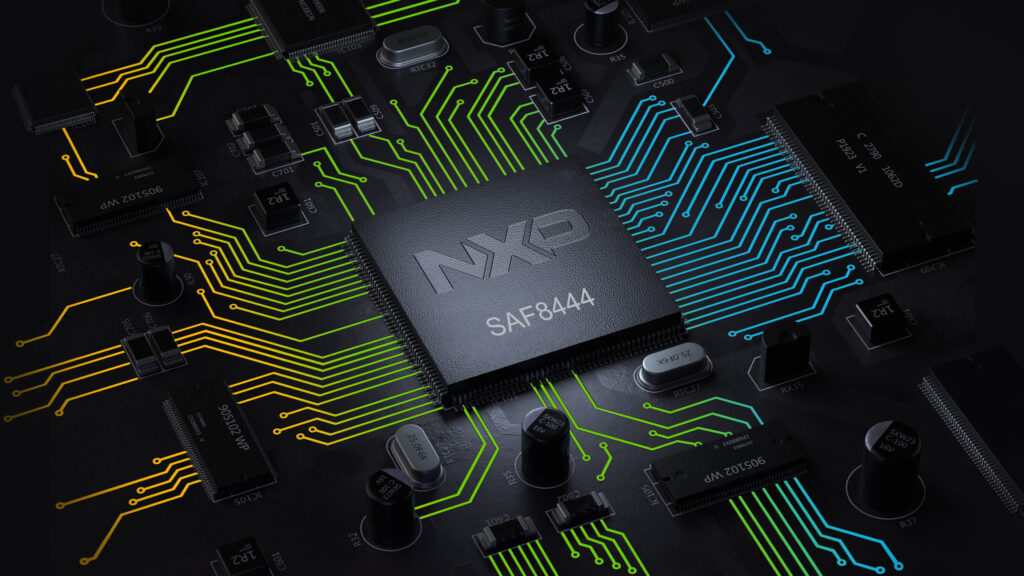
Advanced driver-assistance systems (ADAS) could become more affordable for mass-market vehicles with the introduction of a new single-chip automotive radar solution by NXP Semiconductors that integrates sensing and perception processing into a single device. The radar system-on-chip (SoC) is designed to reduce hardware complexity, lower power consumption and simplify vehicle integration, particularly in electric vehicle platforms.
The device extends the trend toward on-sensor intelligence by enabling perception-level processing directly within the radar sensor. This approach reduces dependence on centralised ADAS compute platforms and helps automakers deploy advanced safety features across a broader range of vehicle segments, including entry-level and economy models.
The key features are:
- Single-chip automotive radar with on-sensor processing
- Operates across the 76–81GHz radar band
- Supports short-, medium- and long-range sensing
- Integrated radar accelerator with interference mitigation
- Designed for L2 and L2+ ADAS applications
Growing regulatory requirements and evolving vehicle safety standards are pushing manufacturers to improve radar performance in complex real-world conditions. Future safety assessments will increasingly require reliable detection of vulnerable road users in low-light environments and consistent performance across varying weather conditions. Traditionally, meeting these requirements has required additional processing resources and higher system costs.

The new radar SoC addresses this challenge by combining camera and radar data processing capabilities within the sensor architecture. By shifting intelligence closer to the sensing layer, automakers can simplify vehicle electronics, reduce thermal management requirements and lower overall bill-of-material costs.
Built on a 28nm RFCMOS process, the device operates across the 76GHz to 81GHz automotive radar spectrum and supports short-, medium- and long-range sensing applications. It targets common ADAS functions including adaptive cruise control, autonomous emergency braking, blind-spot detection and parking assistance systems.
The chip integrates an applications processor, a real-time processing core and a dedicated radar acceleration engine with DSP support. It also incorporates advanced radar interference mitigation technology designed to maintain reliable operation in increasingly crowded RF environments. This capability is becoming more important as the number of radar-equipped vehicles on the road continues to rise.
The platform is supported by a broader development ecosystem that includes software development kits, safety frameworks, security tools and radar algorithms aimed at accelerating deployment of next-generation ADAS systems.
Click here for the original announcement.