A 15 year old engineered a robotic sea turtle that detects invisible ocean threats while helping track marine pollution at scale.
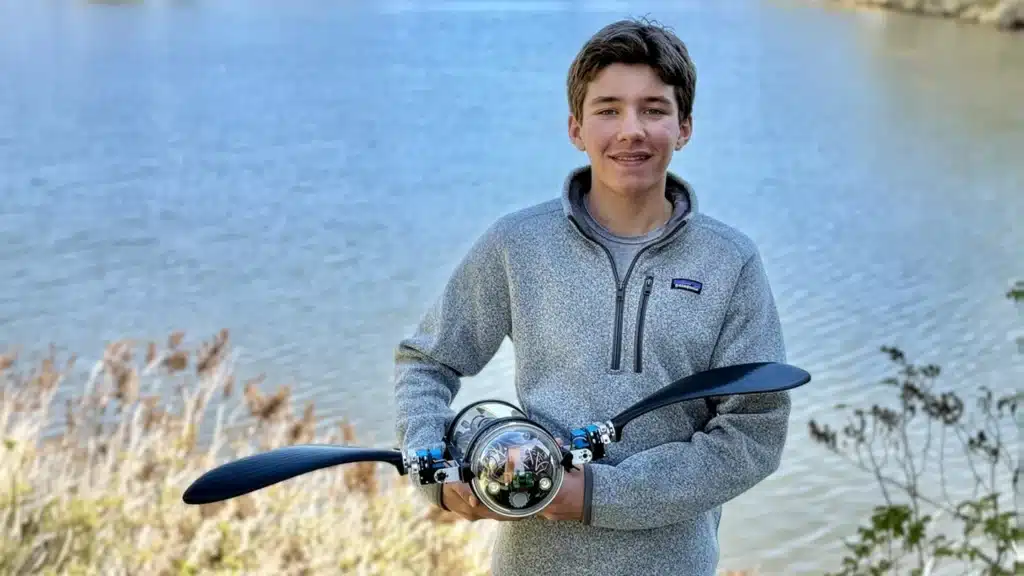
Evan Budz from Burlington, Canada has developed a bionic underwater robot shaped like a turtle that can detect threats affecting marine ecosystems. The project highlights how early stage innovation is increasingly contributing to environmental monitoring and robotics driven conservation efforts.
The device is built to operate underwater and gather environmental information linked to ocean health. It focuses on identifying factors that quietly damage marine ecosystems, including pollution and subtle changes in water quality that are often difficult to detect using conventional monitoring methods. Its turtle inspired structure allows it to move naturally through the water, enabling closer access to sensitive habitats while reducing the risk of disrupting marine organisms. Such an approach could make continuous monitoring more practical in coastal and offshore environments.
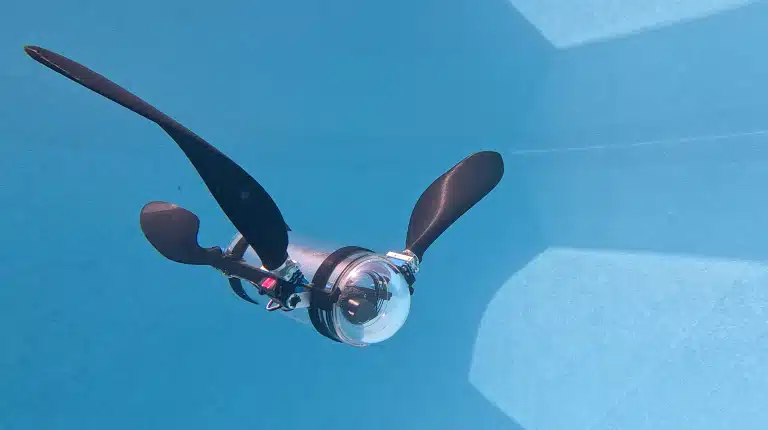
The system combines sensing capabilities with autonomous mobility in a compact robotic platform. By imitating the swimming pattern of a sea turtle, it can efficiently travel across different depths while collecting environmental data over extended periods. The project reflects a growing trend in environmental robotics where engineers draw inspiration from nature to improve navigation, efficiency, and adaptability. As sensing technologies continue to advance, similar biomimetic platforms could support more detailed and reliable mapping of underwater ecosystems.
The project has also demonstrated the growing impact young innovators can have in solving real world engineering challenges. Recognition through a major student competition reinforces the potential of affordable autonomous underwater systems for scientific research and conservation. In the future, fleets of such robotic turtles could help researchers monitor pollution, assess ecosystem health, detect environmental changes earlier, and provide continuous data to support marine conservation efforts across large ocean regions.