




India’s smart-meter rollout is forcing a rethink of connectivity, with Wirepas now looking beyond metering towards a more intelligent grid designed for the next wave of AI-driven infrastructure.

India’s smart-meter programme is becoming an unexpected testbed not just for metering, but for the connectivity infrastructure that could underpin the next generation of intelligent power grids. In an exclusive conversation with EFY, Wirepas CEO Teppo Hemiä revealed how India’s scale, density, cost pressure, and difficult deployment environments have forced the company to rethink how massive connected infrastructure should be built.
The challenge is no longer simply connecting millions of meters. At this scale, coverage gaps, network resilience, long technology lifecycles, and the ability to support changing infrastructure become fundamental problems. Wirepas says its experience in India has already pushed it to improve its network approach for both scale and density.
But the bigger shift is happening beyond today’s smart-meter requirements. Wirepas increasingly sees every meter as a potential sensing point for the grid, rather than simply a device for collecting billing data. As electricity networks become more complex with renewable energy, distributed resources, and massive AI data-centre loads, the ability to obtain reliable and timely information from the physical grid becomes increasingly important.
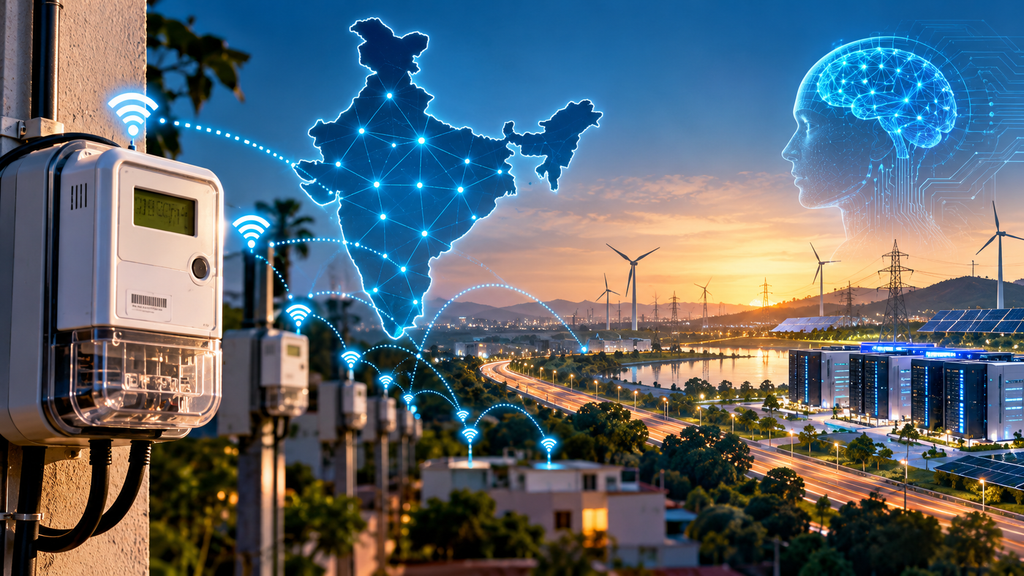
This is also changing the company’s connectivity strategy. Rather than positioning one technology against another, Wirepas is pursuing a hybrid approach in which mesh, cellular, and other connectivity technologies can perform different roles. At the centre of its longer-term vision is NR+, which the company believes can address the growing need for massive machine communication and highly reliable, low-latency connectivity.
The potential application goes well beyond smart meters. As AI moves from generating information to interacting with physical infrastructure, unreliable or delayed data could directly limit what those systems can achieve. Wirepas therefore sees connectivity becoming part of the foundation of physical AI, alongside computing, sensing, and energy infrastructure.
Interestingly, India may now be influencing where that technology goes next. Hemiä says the company has learned from India’s deployment environment not only about technology, but also about building open ecosystems and designing for the economics of large-scale infrastructure. Those lessons are now being taken into European markets.
The bigger question emerging from the conversation is therefore not how many smart meters India can connect, but what those millions of connected assets could eventually become. Could today’s smart-meter network become tomorrow’s distributed sensing layer for an electricity grid built for AI-driven infrastructure?
Stay tuned for the full conversation that explores that question.

