

University of Maryland researchers have developed an electrolyte that adapts in real time during charging, protecting battery electrodes and enabling ultra-fast charging without sacrificing lifespan—paving the way for next-gen EVs, aviation systems, and grid-scale energy storage.
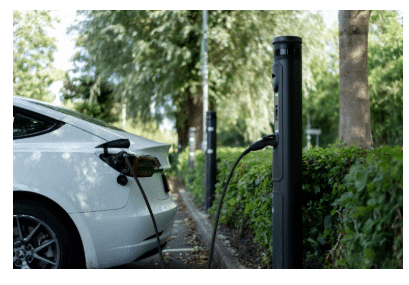
In a leap toward solving one of the toughest bottlenecks in energy storage, researchers at the University of Maryland (UMD) have unveiled a self-adaptive electrolyte that could redefine how fast-charging batteries are built. Led by Professor Chunsheng Wang of the Department of Chemical and Biomolecular Engineering, the work—published in Nature Energy—introduces an electrolyte capable of dynamically expanding its electrochemical stability during operation.
Fast charging is critical for electric vehicles, aviation, and portable electronics, but conventional electrolytes falter under the high voltages and currents involved. During rapid charging, voltage surges can exceed the safe limit, triggering side reactions, heat generation, and long-term capacity loss.
The UMD team’s answer is a single-phase electrolyte that transforms on demand. As charging begins, it spontaneously separates into distinct local environments around the battery’s electrodes. On the anode side, reduction-resistant components gather to protect against low-voltage degradation. Meanwhile, oxidation-resistant solvents migrate toward the cathode, shielding it from high-voltage breakdown.
This real-time spatial reconfiguration effectively widens the electrolyte’s stability window, allowing batteries to handle aggressive charging without structural or chemical compromise. Testing in both aqueous zinc and non-aqueous lithium-metal systems showed remarkable results:
- High Coulombic efficiency under repeated cycles
- Suppressed side reactions that typically plague fast-charging chemistry
- Extended battery life even in demanding operating conditions
The approach could be a game-changer across applications—fast-charging EV batteries, high-power aviation systems, and even large-scale grid storage—bridging the gap between speed, stability, and lifespan. More importantly, it offers a material-level solution that aligns with the push toward clean, high-performance electrification. By turning electrolyte chemistry into an active participant in battery operation rather than a passive medium, the UMD breakthrough signals a shift in how researchers think about next-gen energy storage. If scaled successfully, this adaptive design may finally bring ultra-fast charging to mainstream, high-energy batteries—without the trade-offs that have held the technology back for years.
“This research moves beyond static design toward dynamic functionality,” said Chang-Xin Zhao, postdoctoral researcher and first author. “By leveraging phase behavior, we enable the electrolyte to adapt on the fly—something traditional systems can’t do.”