Designed for dense 5G deployments, a compact power amplifier reduces radio unit power draw without sacrificing performance.
As 5G networks expand, telecom operators are grappling with rising energy consumption and operational costs, particularly at the radio unit level where signal amplification accounts for a major share of power usage. Higher frequencies and denser base station deployments have made energy efficient RF components critical for sustainable network growth.
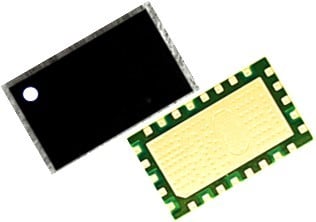
NEC Corporation has developed a high efficiency, compact Power Amplifier Module (PAM) for sub 6 GHz 5G base station radio units, aimed at reducing power consumption while supporting smaller and more flexible radio designs. The newly developed module is designed for integration into next generation radio units and is also intended for use as a standalone component across base stations from different equipment vendors.
The PAM combines gallium nitride based circuit design with high density mounting technology and advanced load modulation simulation techniques. This integration enables efficient signal amplification while maintaining a compact footprint, addressing long standing trade offs between size and efficiency in RF power amplification.
Key features of the product include:
- Power added efficiency of 50 percent, delivering around 10 percent lower power consumption than conventional modules
- Compact 10 mm × 6 mm form factor suited for space constrained radio units
- Optimized for sub 6 GHz 5G base station applications
- Supports dense radio deployments required for wider and more reliable coverage
- Contributes to reduced network energy consumption and operating costs
The development is expected to support more energy efficient 5G infrastructure deployments and reflects ongoing efforts to balance performance, compactness, and sustainability in next generation mobile networks.