What stops industries from running AI at the edge? Power limits, design barriers, and supply risks. Can this new platform remove them?
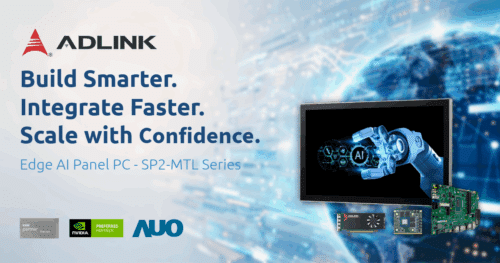
Industries face pressure to process data at the edge, support AI, and keep systems reliable in demanding environments. Many panel PCs cannot deliver the required compute performance, do not allow flexible GPU use, and lock integrators into fixed enclosures. These issues slow deployment and limit scalability. Supply chain gaps and fragmented hardware availability also make it difficult to ensure long-term stability.
The SP2-MTL Series is built to address these problems. It runs on Intel Core Ultra H Series (Meteor Lake) processors, which support AI inference directly at the edge. For higher workloads, it allows GPU expansion through NVIDIA MXM Type-A modules or PCI Express graphics cards. This enables scaling without replacing the entire system and supports uses such as machine vision, automated optical inspection, automated dispensing, pharmacy carousels, and kiosks.
Integration is another common challenge. The series uses an open-frame design that can be embedded into custom enclosures, equipment, or public terminals. It includes modular I/O expansion, reserved signal interfaces, and mechanical flexibility. These features reduce redesign effort and shorten time to market.
Reliability is critical for industrial deployments. To support this, the series uses display panels from AUO that provide consistent quality and long-term supply. The system is certified for safety, EMC compliance, and resistance to shock and vibration, making it suitable for continuous use in industrial settings.
Customization is often needed, but off-the-shelf products rarely fit project requirements. ADLINK offers in-house design and manufacturing for the SP2-MTL, with options for optical changes, mechanical adjustments, and function expansions. This allows integrators to adapt the platform to specific applications without starting from zero.
System integrators, design engineers, and solution providers need platforms that can handle both standard and specialized cases. The series gives them a path to deploy edge AI while keeping flexibility and long-term stability. The company claims that the series brings these together in a scalable design that supports present and future industrial needs.