

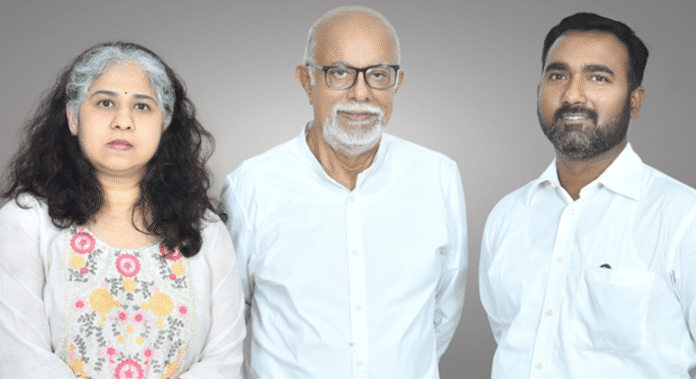
In a market ruled by filters and UV systems, a patented ‘trap-and-kill’ technology is powering Biomoneta’s Avata devices for critical care. But how? Founders Dr Janani Venkatraman, Dr Arindam Ghatak, and Dr Santanu Datta explain why their technology, ZeBox, stands out to EFY’s Nitisha Dubey.
Q. What are your core products, and how does ZeBox fit into them?
A. ZeBox is Biomoneta’s flagship platform technology, not a standalone product. It is a patented ‘trap-and-kill’ air decontamination concept that can be integrated into multiple devices. These devices are marketed under the brand name Avata, with Avata Rx being a key medical-grade product built using ZeBox technology.

Q. So customers buy Avata products and not the ZeBox technology directly, correct?
A. Yes. ZeBox is the proprietary technology that powers the products internally. Customers purchase Avata-branded devices, while ZeBox remains the underlying platform.
Q. Can you explain the ZeBox technology in simple terms?
A. ZeBox works by targeting the biological properties of microbes rather than the physics of particles alone. Microorganisms such as bacteria, fungi, and viruses carry surface charges. ZeBox creates a controlled electric field that attracts microbes to a specially engineered microbicidal surface, where proprietary chemistry, combined with the electric field, destroys them instantly.

Q. How is ZeBox different from HEPA filters and UV-based air purification systems?
A. High efficiency particulate air (HEPA) filters trap particles but do not kill microbes, allowing them to grow on the filter surface and potentially re-enter the environment during replacement. UV-based systems often lack sufficient exposure time in free-flowing air and can produce harmful ozone. ZeBox actively destroys microbes in real time, does not generate ozone, and is safe for continuous use in occupied spaces.

Q. What kind of research and validation supports the effectiveness of your technology?
A. Biomoneta initially built its own environmental chambers to test the technology against individual pathogens. These results were later validated by independent National Accreditation Board for Testing and Calibration Laboratories (NABL)- and International Organisation for Standardisation (ISO)-accredited labs in India and by United States Food and Drug Administration (US FDA)-approved labs in the US. Beyond laboratory testing, the devices were deployed in hospitals, pharma facilities, and research labs to demonstrate effectiveness under real-world conditions.
Q. What patents does Biomoneta hold?
A. Biomoneta has 10 granted utility patents across India, the US, and Europe, with six more under examination. These patents cover hardware innovations such as electrode configuration, airflow architecture, electric field optimisation, and overall device design. The technology is also supported by peer-reviewed scientific publications and US FDA Class II clearance.
Q. How energy-efficient are your devices, and what should users keep in mind while using them?
A. ZeBox technology is highly energy-efficient, consuming less than 4 watts per hour – less than a standard light-emitting diode (LED) bulb. The devices are plug-and-play, meet stringent global safety standards, and have shown a strong safety record across more than 750 deployed units.
Q. What are the maintenance requirements for your devices?
A. ZeBox-powered devices require minimal maintenance. Unlike filter-based systems that require frequent replacement, the core ZeBox module typically requires replacement only after five years of continuous use. There are no consumable filters, reducing operational costs and biohazard risks.
Q. How adaptable is ZeBox for environments like ICUs, clean rooms, or ambulances?
A. ZeBox is highly adaptable and customisable. The same core technology can be configured into compact devices for home care, medical-grade systems such as Avata Rx for intensive care units (ICUs), integrated heating, ventilation, and air conditioning (HVAC) solutions, and specialised units for ambulances. Only the configuration changes, not the underlying technology.
Q. Who are your primary customers?
A. Biomoneta primarily serves hospitals and healthcare facilities, including intensive care units (ICUs), neonatal intensive care units (NICUs), transplant units, oncology wards, operating theatres, dialysis centres, in vitro fertilisation (IVF) clinics, and dental practices. We also serve pharma and biotech companies operating cleanrooms, as well as high-risk home-care environments for immunocompromised patients.
Q. How many units have you sold, and what is the price range?
A. Biomoneta has sold over 750 units so far. Pricing depends on application and configuration, ranging from approximately ₹20,000 to ₹250,000.
Q. Where are your products manufactured?
A. All products are manufactured in an ISO 13485-certified medical device manufacturing facility owned by Biomoneta in Sahakar Nagar, Bengaluru. While third-party vendors are used when required, core manufacturing and quality control are handled in-house.
Q. Are your components sourced from India or abroad?
A. The core ZeBox technology is entirely sourced and manufactured in India. While some electronic components initially had external dependencies, reliable Indian suppliers were later identified, making the technology largely indigenous.
Q. What challenges did you face during product development and manufacturing?
A. Early challenges included the lack of suitable labs in India to validate novel airborne decontamination technologies, which led the team to build its own testing infrastructure. Manufacturing challenges included sourcing small quantities of specialised components due to high minimum order requirements. These issues were gradually resolved through in-house capabilities and local supplier networks.
Q. How has the company grown financially, and what are your revenue sources?
A. The previous fiscal year focused primarily on regulatory milestones, particularly US FDA clearance, which temporarily slowed commercial activity. In the current fiscal year, Biomoneta has seen strong growth driven by device sales. Going forward, revenue is expected to come from a combination of product sales, technology licensing, and royalties through partnerships with global players.