Local AI just took a big leap. Larger models and generative workloads now run at the edge without the cloud. Here is what changes and why it matters.
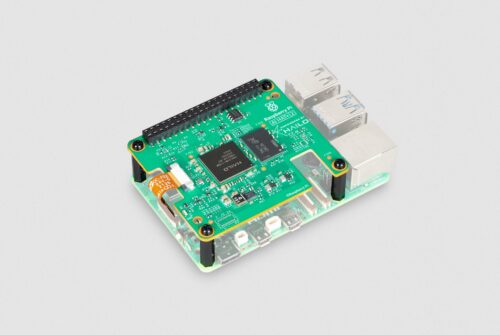
A little over a year ago, Raspberry Pi had introduced the AI HAT+, an add-on board for Raspberry Pi 5 using the Hailo-8 (26 TOPS) and Hailo-8L (13 TOPS) neural network accelerators. By running AI directly on the device, AI HAT+ enabled edge AI with local processing, improved data privacy, and no need for cloud-based AI services.
AI HAT+ delivers strong acceleration for vision models such as object detection, pose estimation, and scene segmentation. However, it does not support the growing class of generative AI (GenAI) models. Now, Raspberry Pi has announced the AI HAT+ 2, its first AI product built to address generative AI workloads.
Powered by the new Hailo-10H neural network accelerator, Raspberry Pi AI HAT+ 2 delivers 40 TOPS (INT4) of inference performance, allowing generative AI workloads to run on Raspberry Pi 5. All AI processing runs locally, without a network connection, providing low latency while preserving the privacy, security, and cost benefits of cloud-free AI first introduced with AI HAT+.
Unlike the original AI HAT+, AI HAT+ 2 includes 8GB of dedicated on-board RAM, allowing it to run much larger models. Combined with an updated hardware architecture, this enables the Hailo-10H to accelerate large language models (LLMs), vision-language models (VLMs), and other generative AI workloads.

For vision tasks such as YOLO-based object detection, pose estimation, and scene segmentation, AI HAT+ 2 delivers performance comparable to the 26-TOPS AI HAT+, supported by its on-board memory. It retains the same integration with the Raspberry Pi camera software stack, including libcamera, rpicam-apps, and Picamera2. Existing AI HAT+ users can move to AI HAT+ 2 with minimal changes to their software.