

A new two-channel analog front end promises to eliminate long-standing microphone and line-level trade-offs by capturing everything from whisper-quiet signals to hot studio outputs on a single chip.
A newly released two-channel analog front end (AFE) by Triad Semiconductor is set to change how professional and prosumer audio equipment handles signal capture, addressing a decades-old design compromise at the very first stage of the signal chain.
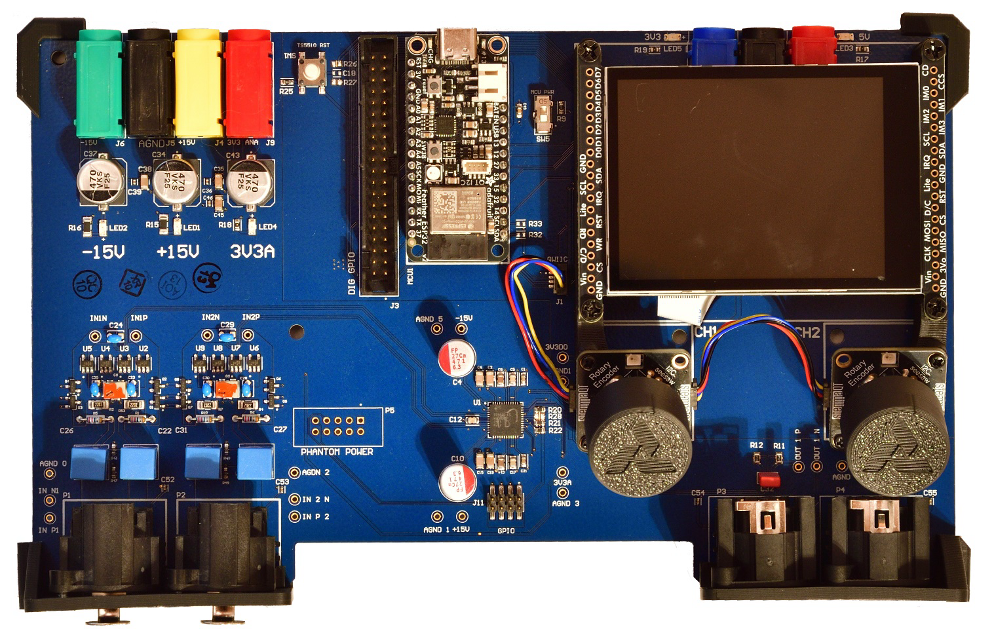
At the core of the problem is the input stage itself. Conventional microphone pre-amp architectures, largely based on instrumentation amplifiers, struggle to cover the full spectrum of real-world audio signals. Designers are forced to choose between optimizing for ultra-low microphone levels or accommodating high-level line inputs such as mixers, synthesizers, or outboard gear. Bridging that gap typically requires external pads, relays, or parallel input paths—adding cost, PCB area, and often degrading signal-to-noise ratio.
The key features are:
- 156 dB total input capture range
- Handles mic and line inputs on one shared channel
- Current-conveyor input architecture
- 90 dB common-mode rejection
- Direct, optimized interface to audio ADCs
The newly launched AFE takes a different architectural approach. By using a current-conveyor-based input stage rather than a traditional voltage-domain design, it can accept an exceptionally wide range of input amplitudes and digitally scale them to match modern audio ADCs. The result is a single, shared input that can seamlessly handle both microphone and line-level signals without external attenuation networks.
From a performance standpoint, the device delivers a total input capture range of 156 dB, spanning from very high input levels—up to +28 dBU—down to extremely small signals with an equivalent input noise floor of –128 dBU. This wide dynamic range is complemented by a common-mode rejection ratio exceeding 90 dB and high tolerance to common-mode voltages, making the AFE well suited for long cable runs and electrically noisy environments typical of live sound, studios, and field recording.
For system designers, the implications are significant. Integrating functions that previously required multiple external components reduces board complexity and shrinks the analog front end footprint. Direct, optimized interfacing with differential audio ADCs further lowers system cost while reducing the risk of overdriving downstream converters.
By collapsing microphone and line-level front ends into a single, noise-robust input stage, this new AFE points to a simpler, more flexible future for audio hardware design—one where engineers no longer have to compromise between dynamic range, noise performance, and integration.